Working archive

Finally Offline

Every asset, reference and draft from the editorial project, in one place. Three pieces: two written, one still in research. Tap any image to open it full size, or use the download link under it.

01

The house style

Locked and approved by Gunner on September 10, 2026. It is the spine of the project: every piece is written to it.

02

Big Tech's AI assistant wars

The carousel post. Cover, blurb card and the written blurb, plus the references Gunner sent that set the format.

Source: Fast Company, Big Tech's AI assistant wars (2026)

Final assets

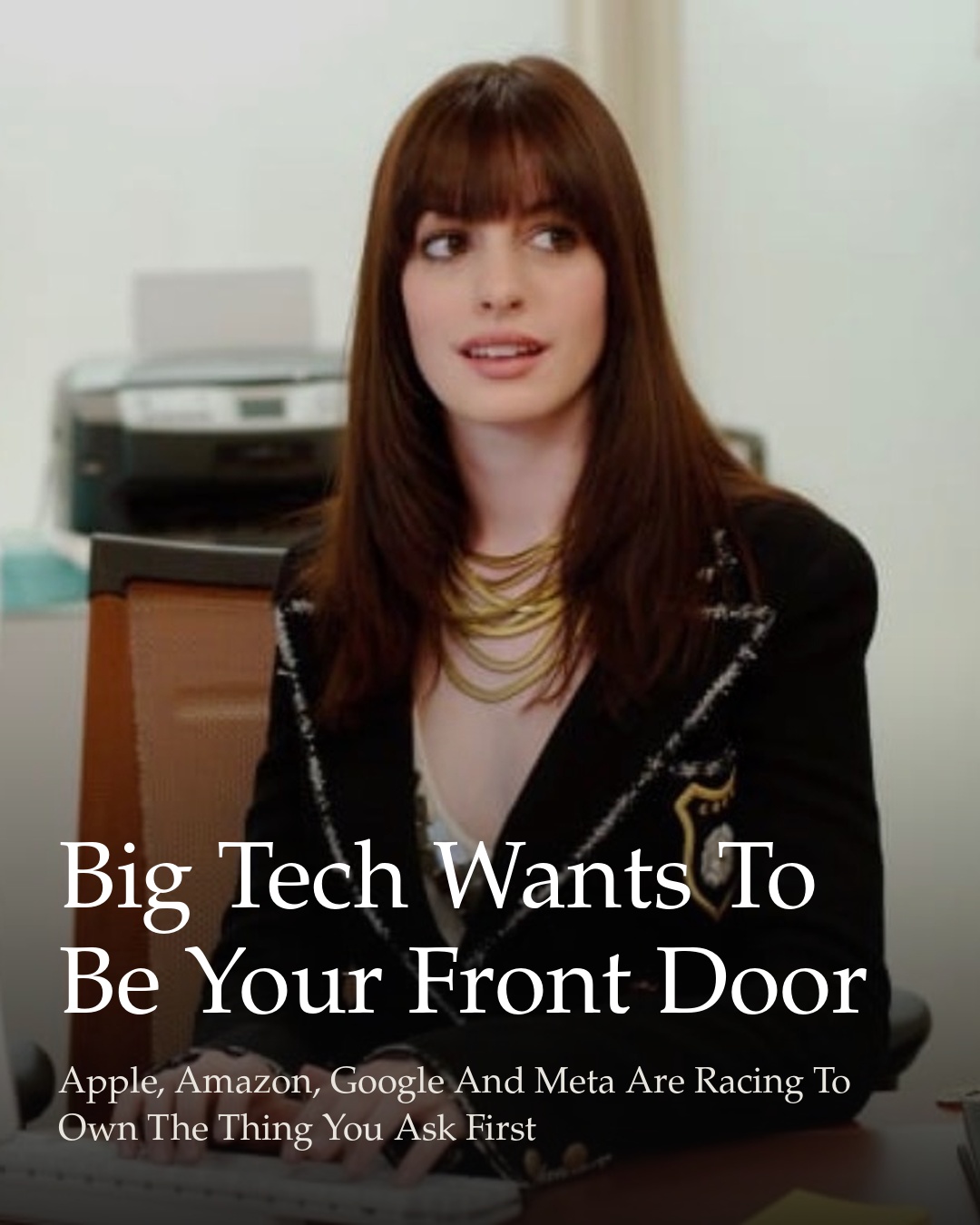
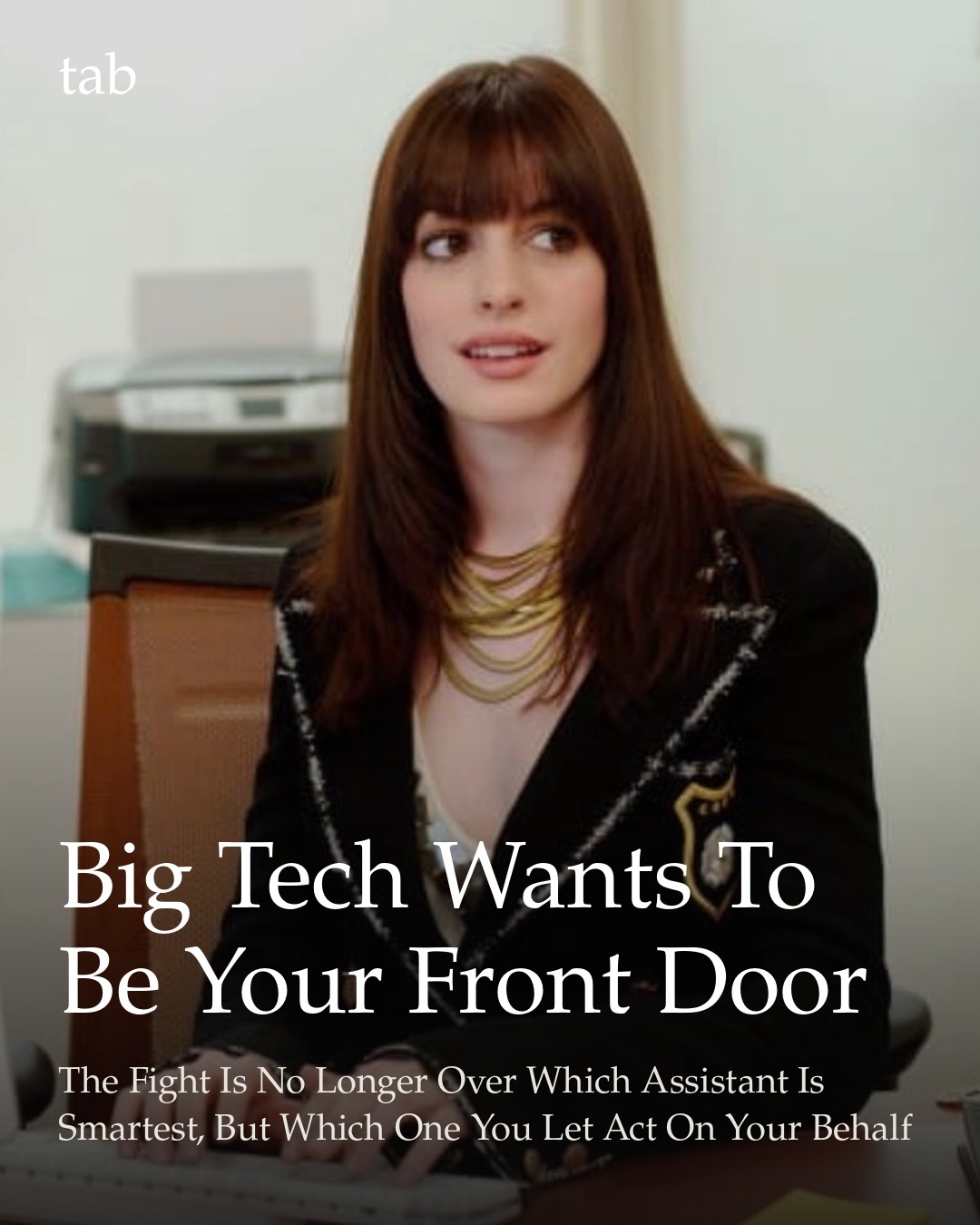
Cover, final
FINAL Cover, final Download full size
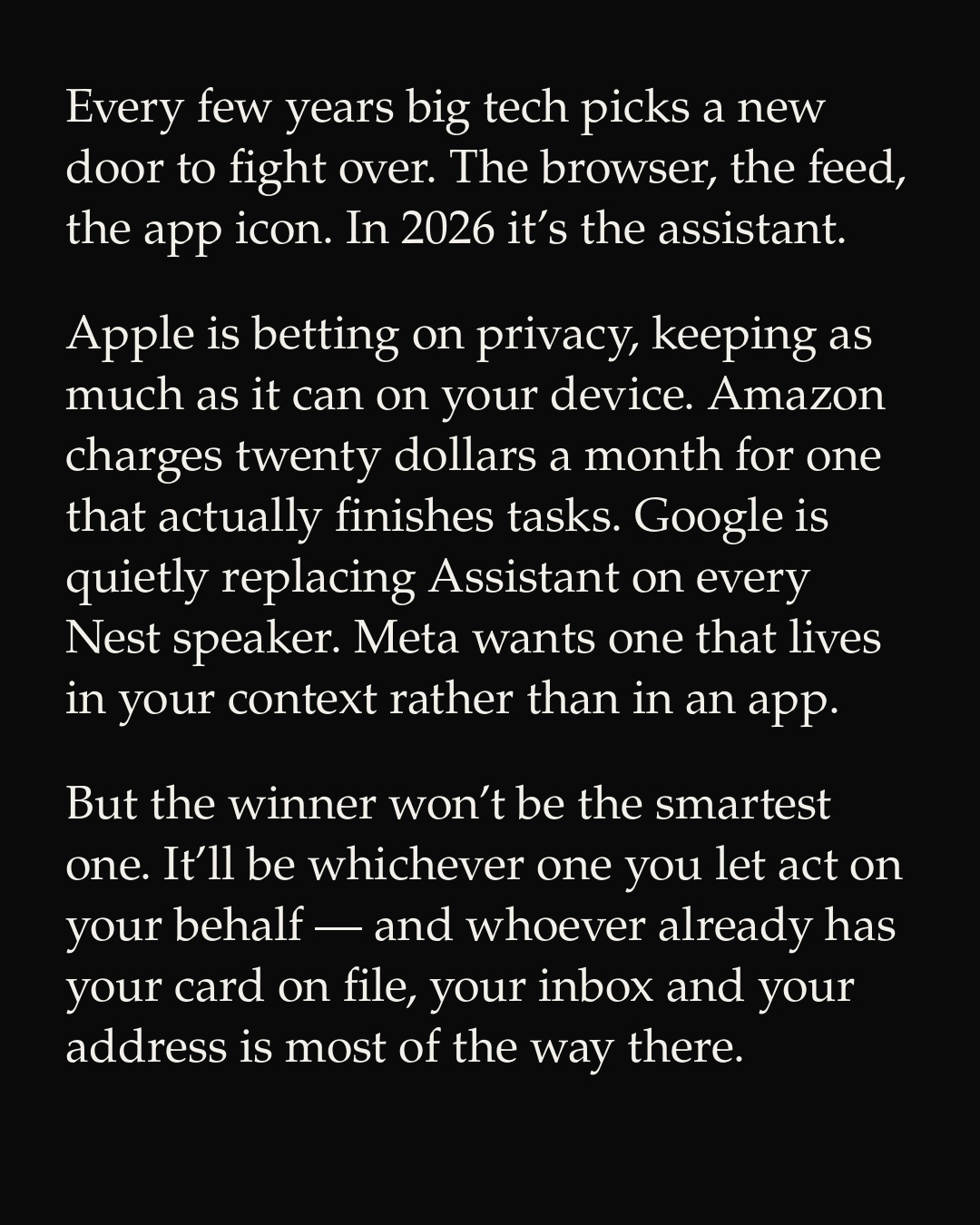
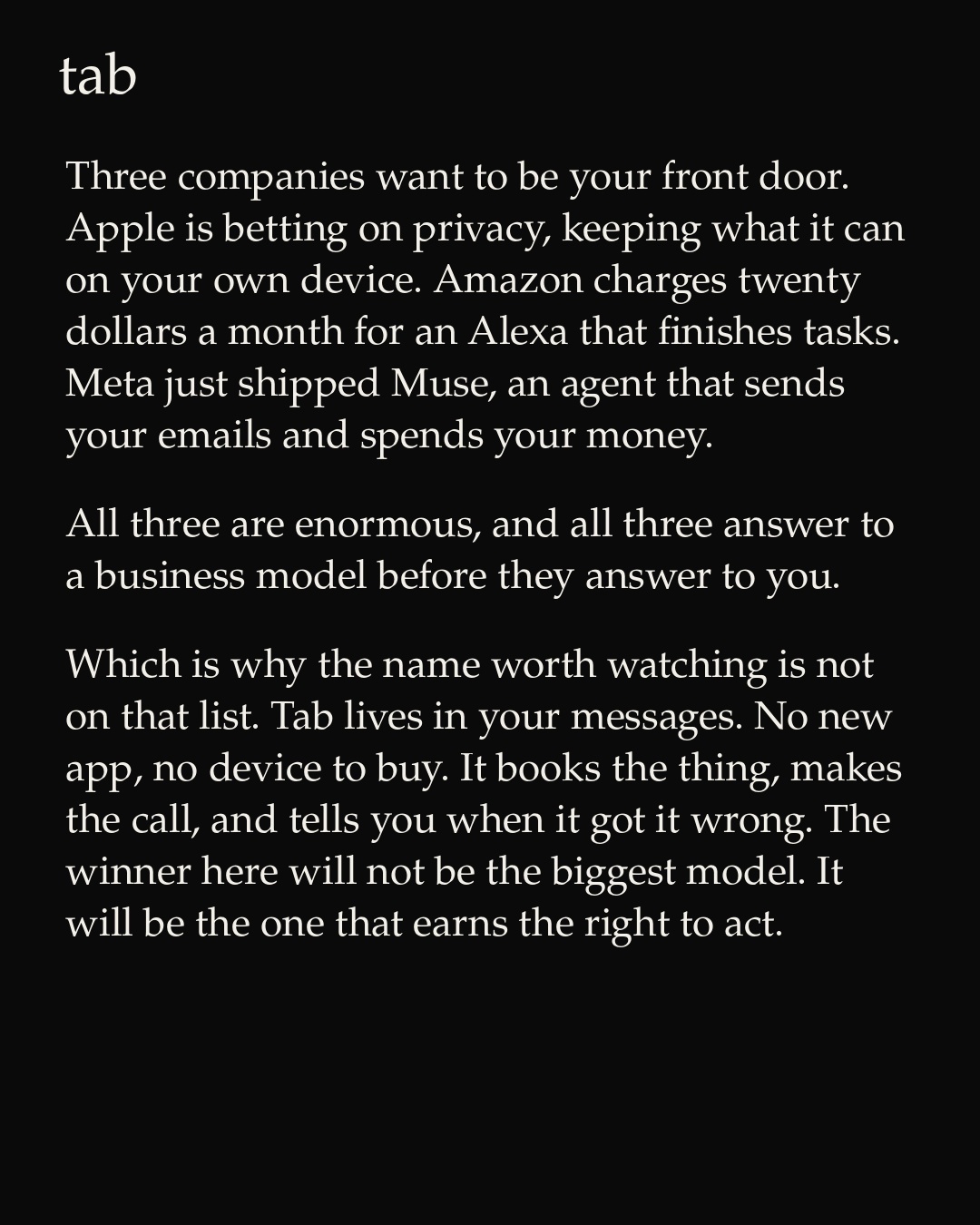
Blurb card, final
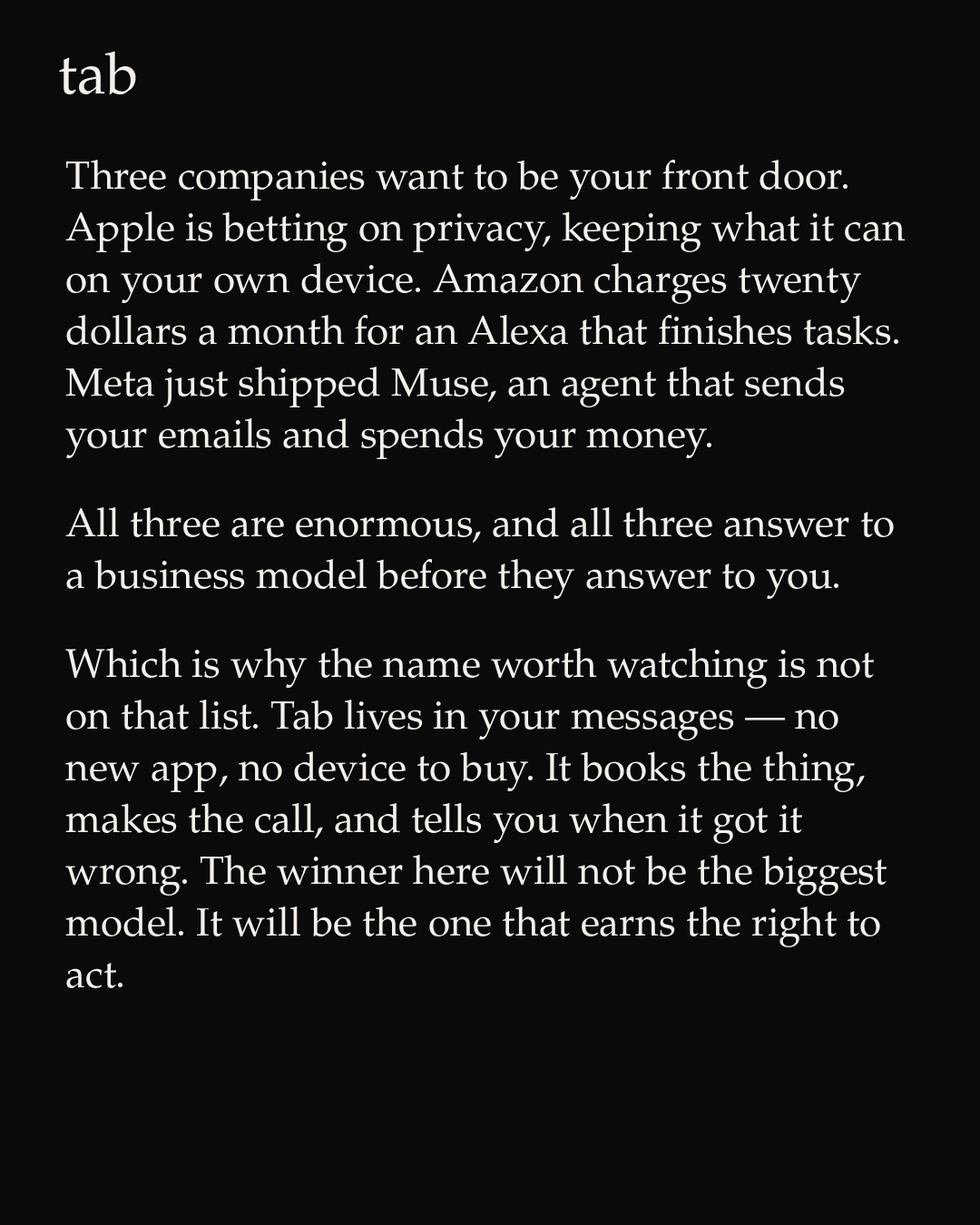
FINAL Blurb card, final Download full size

The blurb

1,229 words. Download as text

THE ASSISTANT WARS ARE BEING FOUGHT OVER THE WRONG QUESTION

Every few years the tech industry picks a new surface to fight over. The browser. The search box. The feed. The app icon. Right now it's the assistant, and the framing in most coverage — including a recent Fast Company piece comparing Apple, Amazon, Meta and Google — is that four giants are racing to build the smartest one.

That's the wrong scoreboard. Smart is close to settled. What's actually being decided is who gets permission to act on your behalf, and that's a fight about trust and plumbing, not intelligence.

Look at what each company is actually betting.

Apple is betting on privacy as a moat. Apple Intelligence keeps as much as possible on the device, and when a request is too heavy for your phone it goes to Private Cloud Compute — Apple's attempt to extend device-grade security into a data center you can verify rather than just trust. It's the oldest Apple play there is: integrate deeply, remove the scary part, and convert that relief into lock-in. The pitch isn't "ours is smarter." It's "ours won't sell you out."

Amazon is betting on agency, and charging for it. Alexa+ isn't a new voice on an old system; it's a rebuild aimed at multi-step tasks that finish. Twenty bucks a month, free if you have Prime. That price tag is the interesting part. The moment an assistant has its own subscription line, it stops being a loss-leader that exists to sell speakers and becomes a product that has to justify itself. It also quietly funds the enormous compute that doing real tasks requires.

Google is betting on replacement. Gemini for Home is taking over Nest speakers and displays outright. When a company changes the brain and leaves the wake word alone, that's not an experiment — that's a migration.

Meta is betting on context. Zuckerberg has started saying "personal superintelligence," which sounds like a press release but describes something concrete: an AI tuned to you specifically, running across your devices and your accumulated stuff, rather than a generic model you visit. Open weights, your corpus, local where possible.

Four coherent strategies. Four different business models underneath them. And all four skip past the thing that actually determines whether any of this is useful.

Here's the test that matters: can it finish?

Not "can it answer." Answering is a solved problem and a commodity. The gap between an assistant that tells you the three best places to stay and one that reads the live booking calendar, catches that the price on the listing changed, tells you honestly that the cheaper place only has three beds for six people, and then holds the reservation — that gap is the entire product. Everything before it is a search engine with better manners.

Finishing is hard for reasons that have nothing to do with model quality. It requires a payment method. It requires logins. It requires the right to make a decision that costs money and can't be undone. It requires being wrong in public occasionally and saying so. Those are trust problems and permission problems, and no amount of parameter count solves them.

Which is why the assistant wars are really a war over access. Apple's advantage isn't its model, it's that it already sits between you and your messages, your photos, your payments. Amazon's advantage isn't Alexa+, it's that your card is already on file and your address is already correct. Google's advantage is your calendar and your inbox. Meta's advantage is knowing more about your social context than you'd like to think about. In every case the model is the least defensible part of the stack. The relationship is the moat.

There's a second thing under this that deserves more attention than it gets. The Fast Company piece notes, almost in passing, that we're heading somewhere bifurcated: a small group with bespoke, high-performance AI genuinely tuned to them, and everyone else inside a commercial assistant tuned to a business model.

That's the real story, and it's not a technical prediction — it's a distribution prediction. If most people's front door to the internet is an assistant owned by a company that also sells ads, or sells products, or takes a cut, then "what should I buy" and "where should I eat" and "what should I watch" stop being questions with neutral answers. The assistant becomes the shelf. And shelf space has always been for sale.

For anyone who makes things — brands, creators, small labels, anyone whose business depends on being discovered — this is the part to sit with. For twenty years the game was being findable: SEO, then social, then whatever the algorithm rewarded that quarter. The next version of that game is being legible to an assistant. Does the thing you make have a clean product feed, real availability data, a price an agent can read, a checkout a machine can complete? Because increasingly the customer won't be a person scrolling. It will be software acting for a person who has already stopped scrolling.

That sounds dystopian written down. In practice it's mostly mundane, and occasionally better. Software that can actually finish tasks removes a category of small misery — the twenty tabs, the hold music, the form you fill in three times. The upside is real.

But the incentive question doesn't go away just because the interface got pleasant. When one thing sits between you and every decision, the honest version of it has to be willing to say "the expensive option isn't worth it," "this is sold out, here's what's actually left," "I was wrong about that price." An assistant that can't tell you bad news isn't an assistant. It's a storefront with a personality.

So the question to ask about any of these products isn't which model scores highest. It's:

Who does it work for? If the answer is "the company that made it," you'll find out eventually, usually at the moment its interests and yours diverge.

What happens when it's wrong? Systems that surface their own errors are the only ones worth handing real decisions to.

Can it do the last mile? Not summarize, not suggest — actually complete the thing. Anything short of that is a demo.

Apple, Amazon, Google and Meta are all going to ship something competent. The models will converge, because they always do. What won't converge is the incentive structure underneath each one, and that's the thing that will still be there in five years when nobody remembers which one had the better benchmark scores.

The winner of the assistant wars won't be the smartest one. It'll be the one people actually let do things — and that permission gets earned the same boring way it always has: by being useful, being honest when it isn't, and not being caught selling the answer.

One last thing worth noticing: none of these companies is really selling you an assistant. They're selling you a default. Defaults are the most valuable real estate in consumer software precisely because almost nobody changes them, and the assistant is about to become the biggest default any of us has ever accepted without reading. Choose that one deliberately, the way you'd choose a bank or a doctor, because switching costs compound quietly and the thing knows more about you every month you stay.
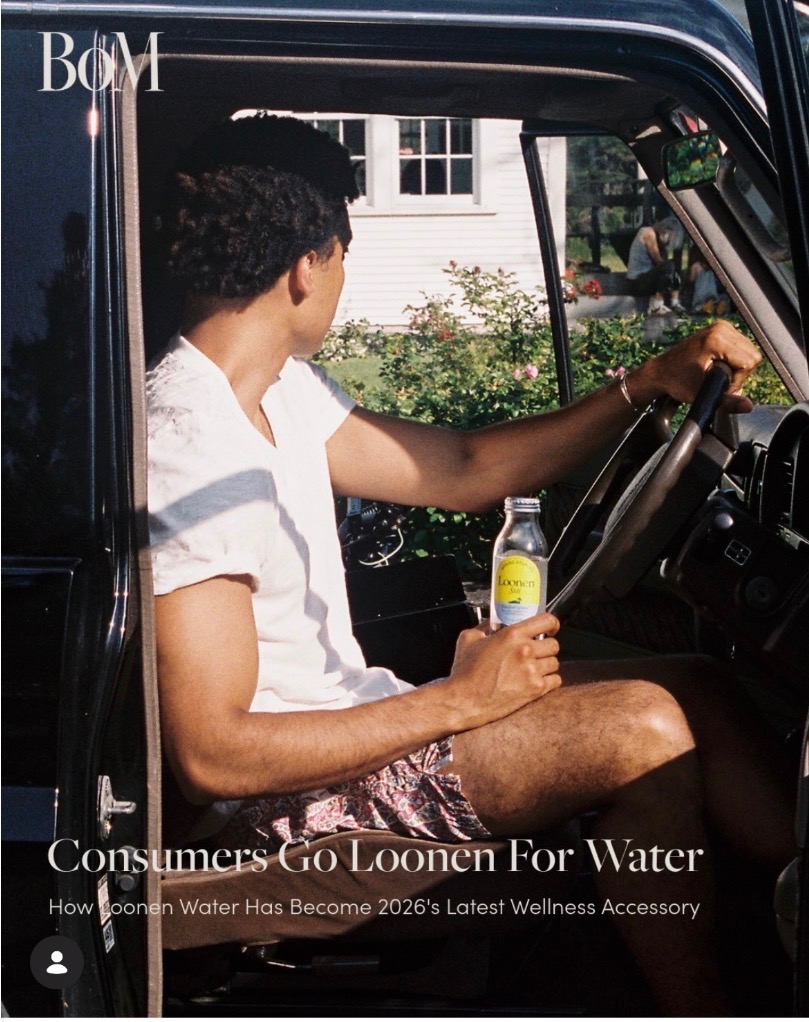
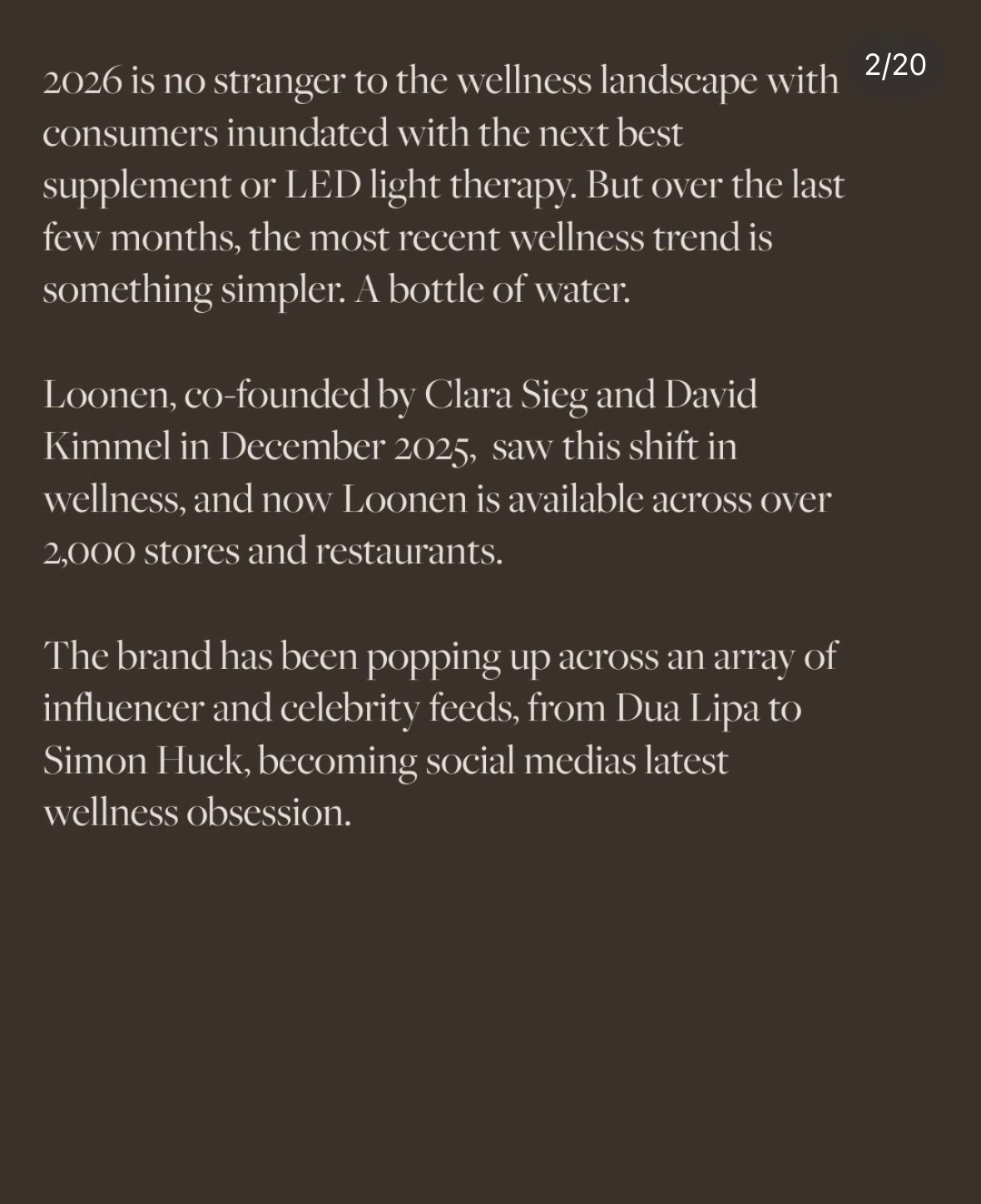
References Gunner sent

Bill of Materials cover layout, sent by Gunner to set the cover format
HIS REFERENCE Bill of Materials cover layout, sent by Gunner to set the cover format Download full size
Bill of Materials body length, sent by Gunner to set how long the blurb runs
HIS REFERENCE Bill of Materials body length, sent by Gunner to set how long the blurb runs Download full size
Source image sent by Gunner: The Devil Wears Prada still
HIS REFERENCE Source image sent by Gunner: The Devil Wears Prada still Download full size

Iterations

Show the five working versions that came before the finals
Cover v1, no wordmark
WIP Cover v1, no wordmark Download full size
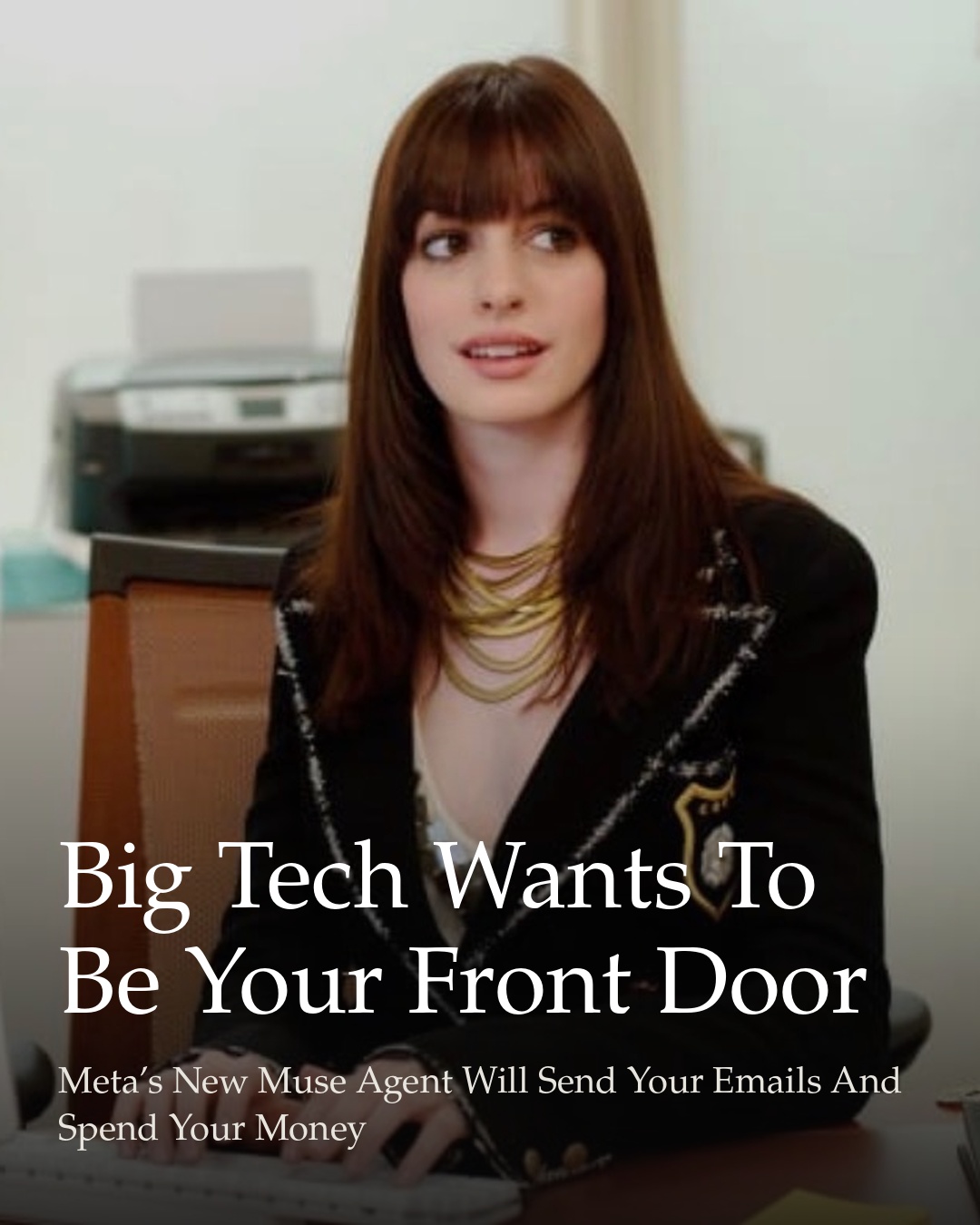
Cover v2, muse subhead
WIP Cover v2, muse subhead Download full size
Blurb card v1, original
WIP Blurb card v1, original Download full size
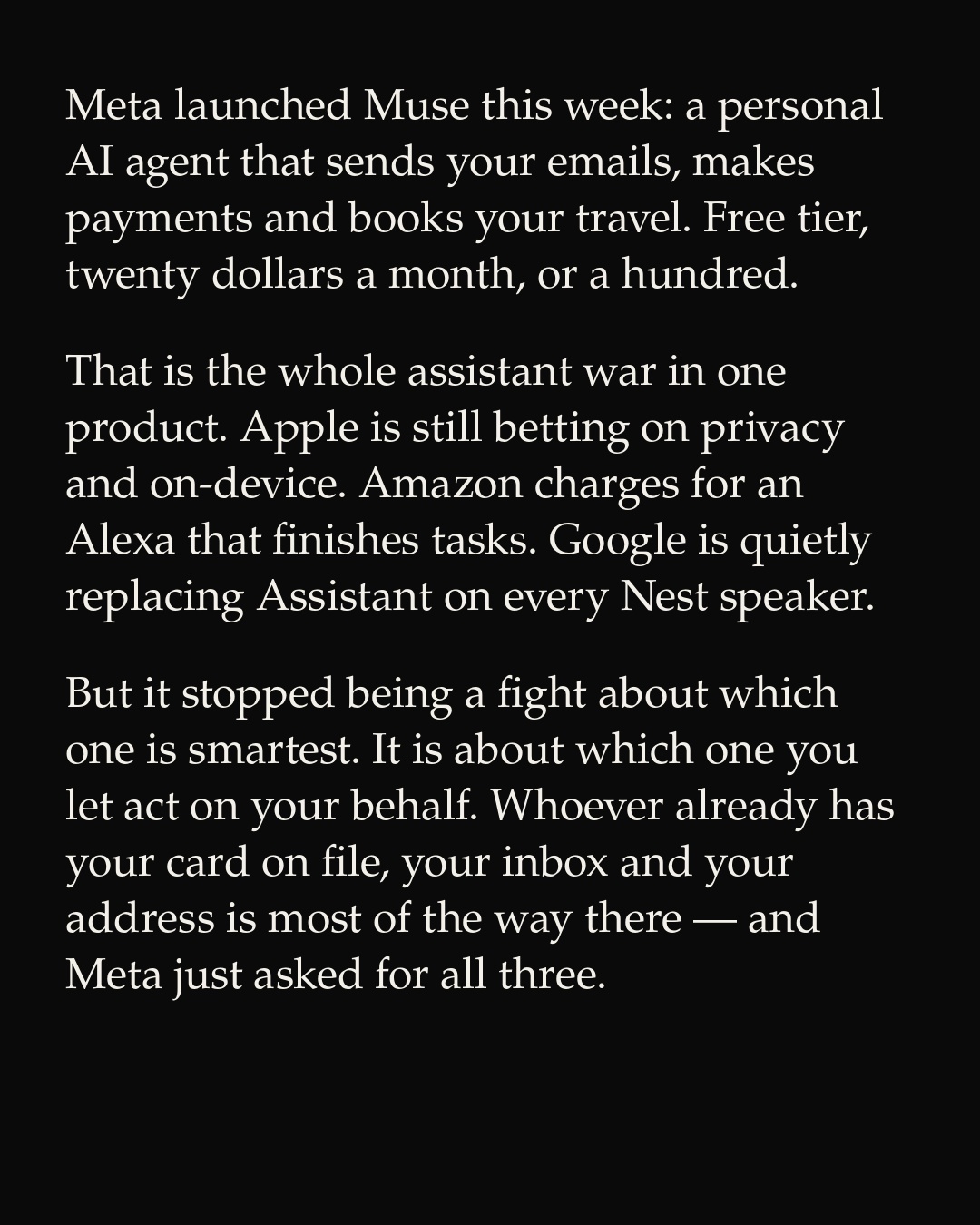
Blurb card v2, muse open
WIP Blurb card v2, muse open Download full size
Blurb card v4, still carrying an em dash
WIP Blurb card v4, still carrying an em dash Download full size

03

Artist Branding 101: The Twelve Archetypes, And How To Actually Use One

Your brand is not a colour or a logo. It is the consistent world around your music, and there are twelve recognisable shapes it can take.

Source: an 18 slide Instagram carousel by beatcave.ca, instagram.com/p/DcTemMMFfNE, August 21, 2026.

Ask most artists what their brand is and you get a mood board. Colours, a font, a filter, maybe a logo somebody made in an afternoon. That is packaging. It is not a brand.

Your artist brand is the consistent world surrounding your music. What you believe. What you talk about. How you make people feel: comforted, inspired, rebellious, curious. How you communicate, whether that reads funny or thoughtful or mysterious or raw. How you look, across photos and styling and artwork and video. And, underneath all of it, what people have learned to expect from you.

That last one is the whole game. A brand is a set of expectations you have trained in other people. Which means the goal is not to invent a persona. It is to take the strongest parts of who you already are and make them recognisable.

Why "be unique" is bad advice

Trying to be unrecognisable is the most common way artists make branding harder than it needs to be. Uniqueness is not a starting point, it is a result. Starting from nothing, with no reference to anything anyone already understands, means every piece of content has to explain itself from scratch.

Archetypes fix that by giving you a recognisable pattern to start from. They are personality shapes people already know how to read. The rebel, the romantic, the comedian, the leader, the visionary. They are not boxes that limit you. They are shortcuts that let an audience place you quickly, so that everything you do afterwards accumulates instead of scattering.

Once people understand your role, remembering you gets easy. Here are the twelve.

The twelve

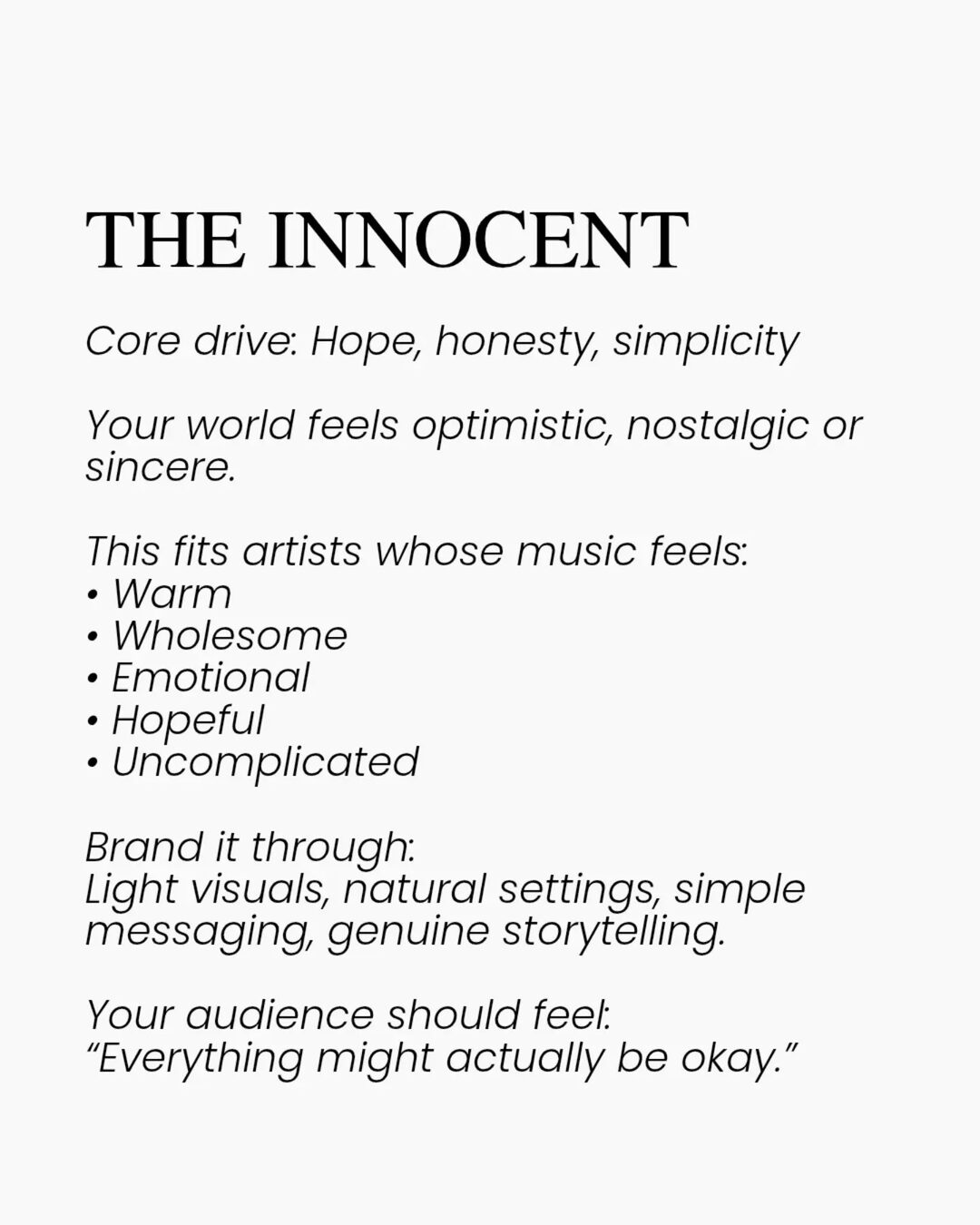
The Innocent. Core drive: hope, honesty, simplicity. The world feels optimistic, nostalgic, sincere. Music that lands warm, wholesome, emotional, uncomplicated. Light visuals, natural settings, plain messaging. Your audience should feel: everything might actually be okay.

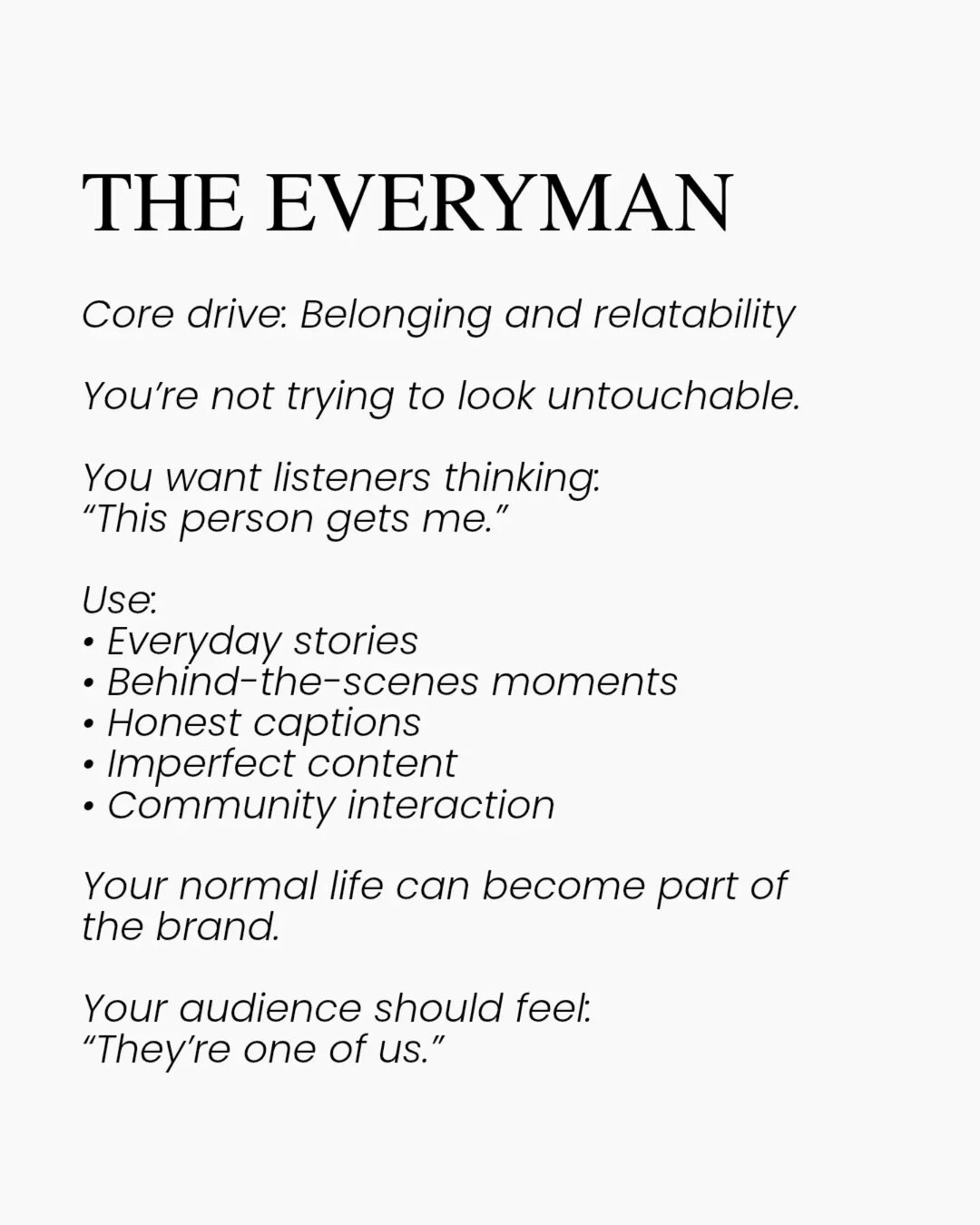
The Everyman. Core drive: belonging. You are not trying to look untouchable. Everyday stories, behind-the-scenes, honest captions, imperfect content, real community interaction. Your ordinary life becomes part of the work. Your audience should feel: they're one of us.

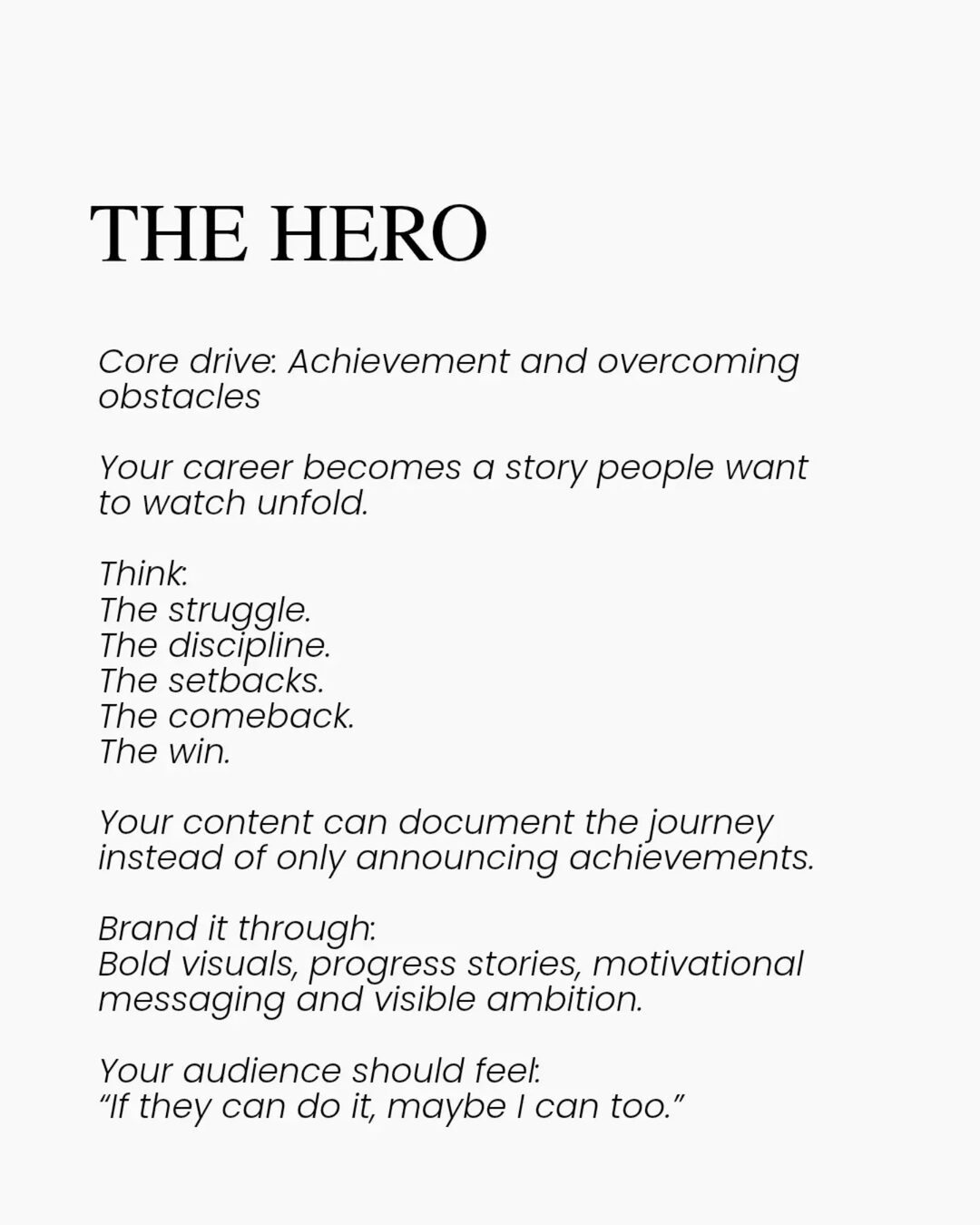
The Hero. Core drive: achievement. Your career becomes a story people watch unfold: the struggle, the discipline, the setbacks, the comeback, the win. The move is documenting the journey rather than only announcing the results. Your audience should feel: if they can do it, maybe I can too.

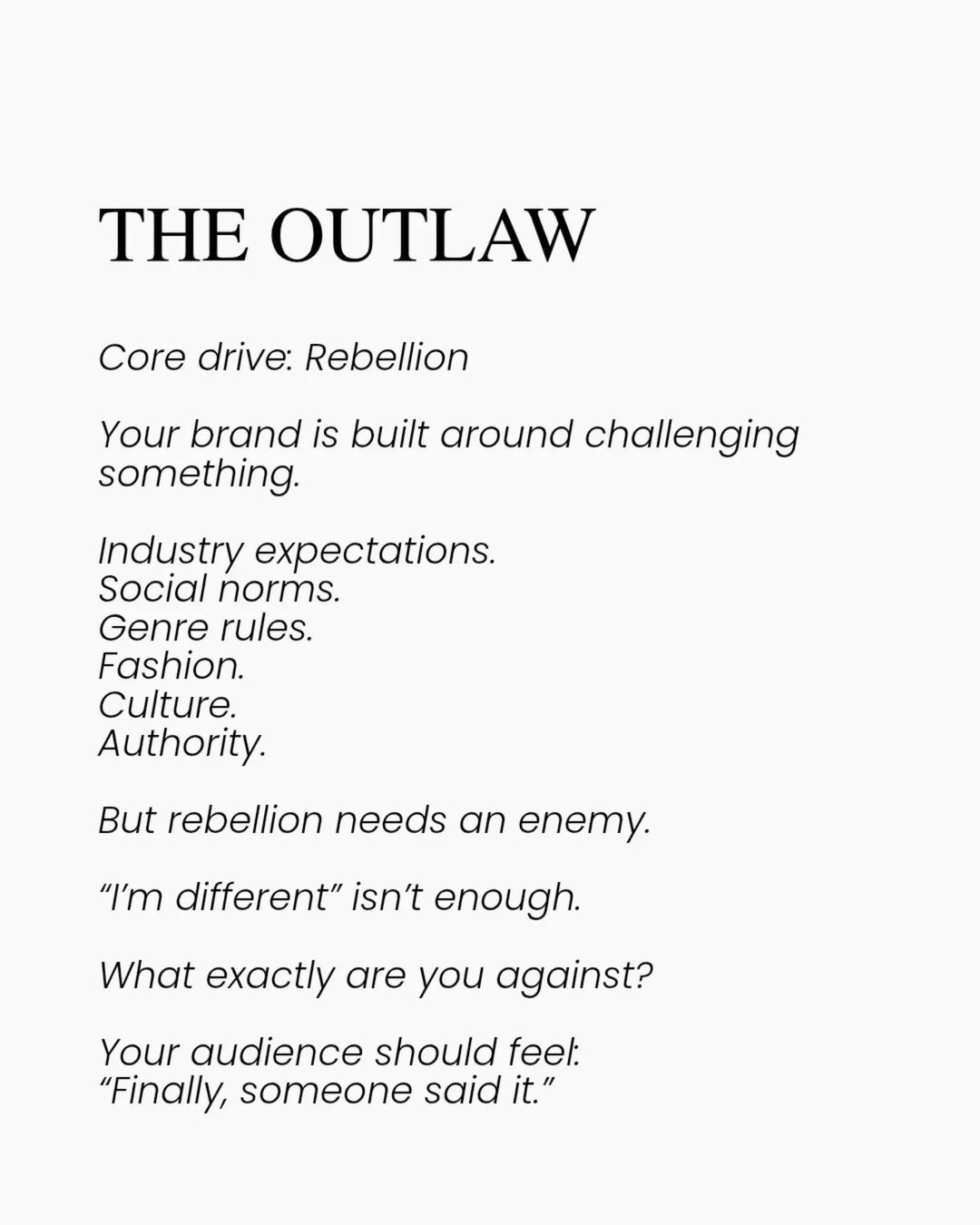
The Outlaw. Core drive: rebellion. Your brand is built on challenging something specific: industry expectations, genre rules, social norms, authority. But rebellion needs an enemy. "I'm different" is not a position. What exactly are you against? Your audience should feel: finally, someone said it.

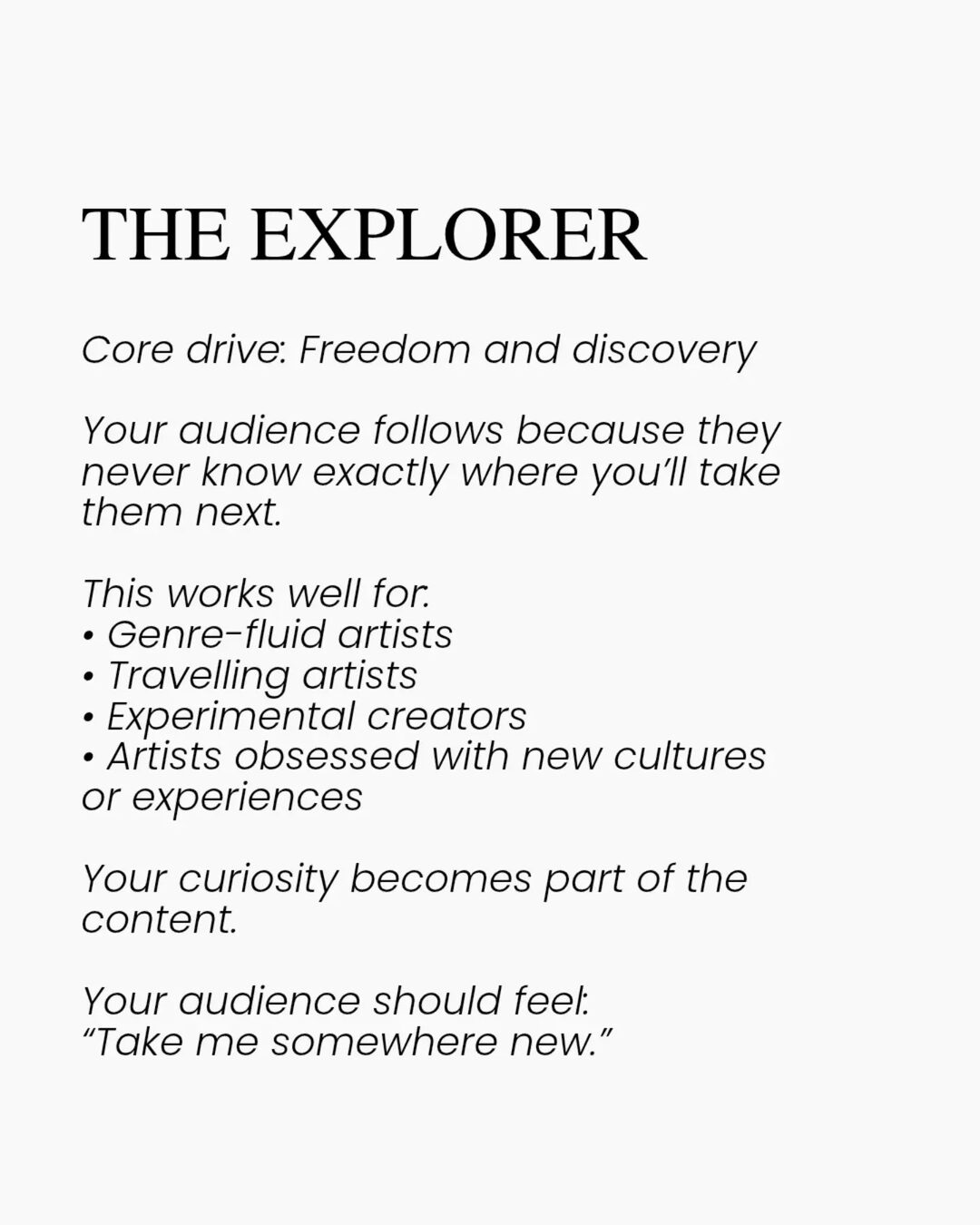
The Explorer. Core drive: freedom and discovery. People follow because they never quite know where you will take them next. Genre-fluid artists, travelling artists, experimentalists. Your curiosity is the content. Your audience should feel: take me somewhere new.

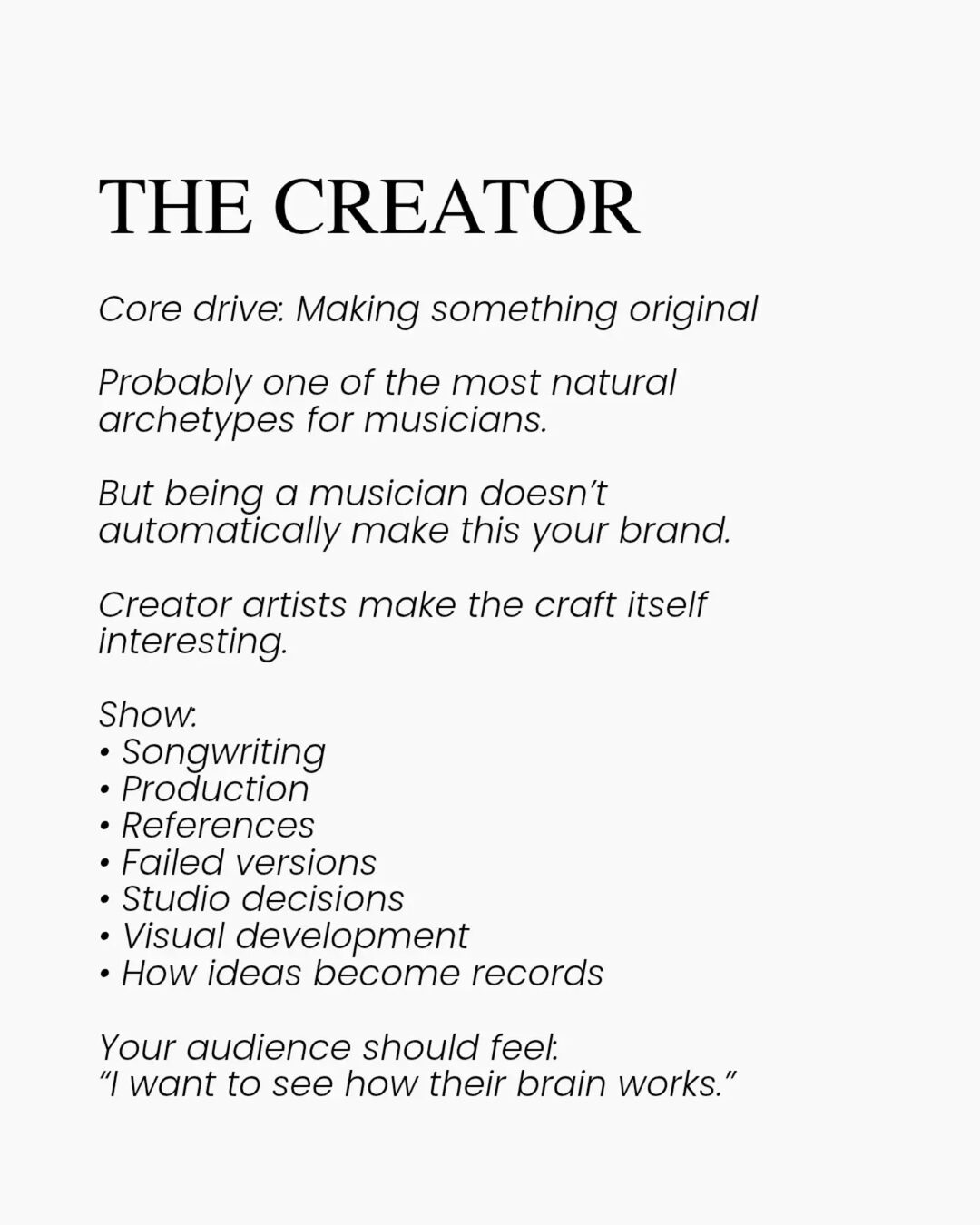
The Creator. Core drive: making something original. The most tempting one for musicians, and the most misunderstood, because being a musician does not make this your archetype. Creator artists make the craft itself interesting. Songwriting, production, references, failed versions, studio decisions, how an idea becomes a record. Your audience should feel: I want to see how their brain works.

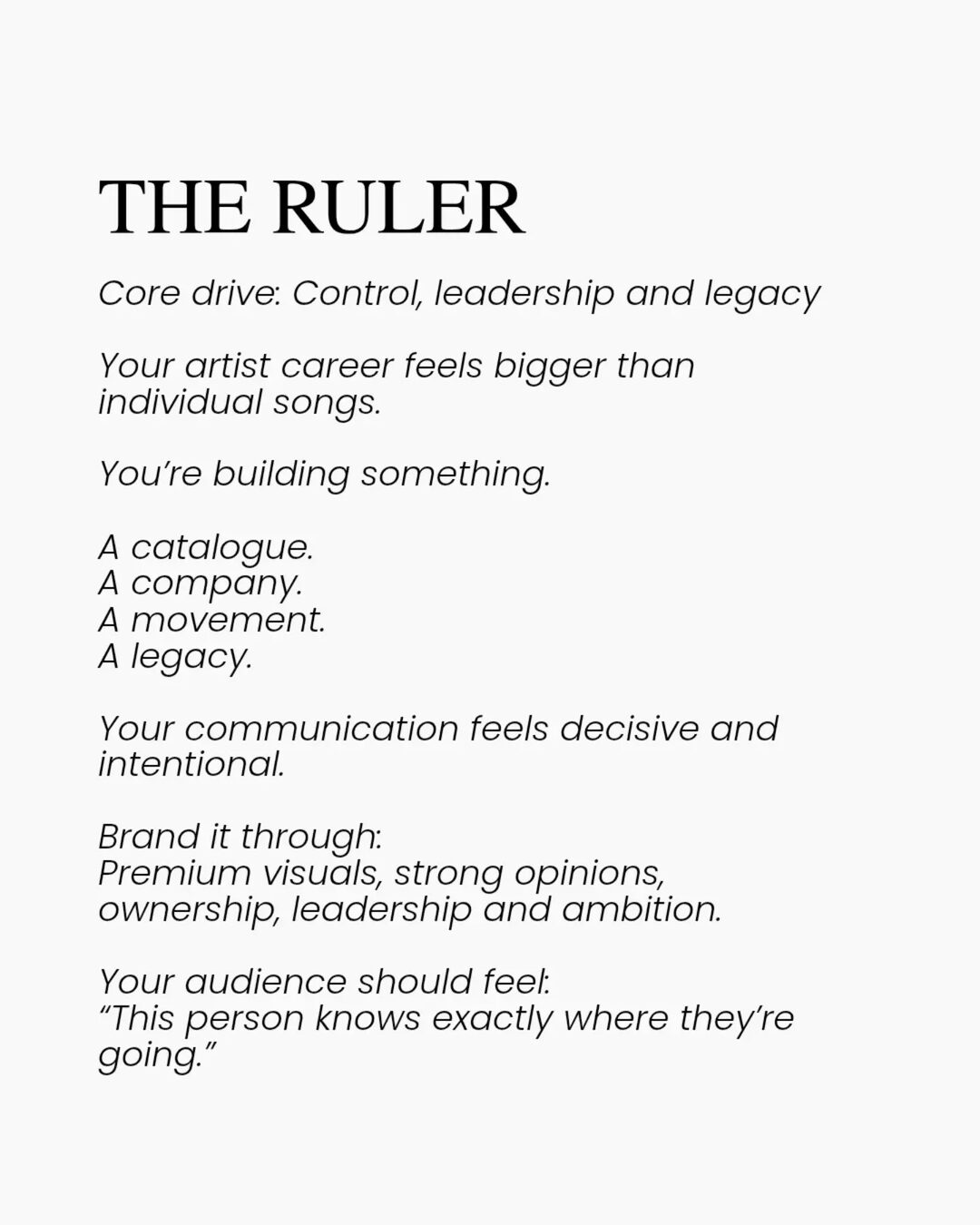
The Ruler. Core drive: control, leadership, legacy. The career feels bigger than any individual song. A catalogue, a company, a movement. Communication is decisive. Premium visuals, strong opinions, ownership. Your audience should feel: this person knows exactly where they're going.

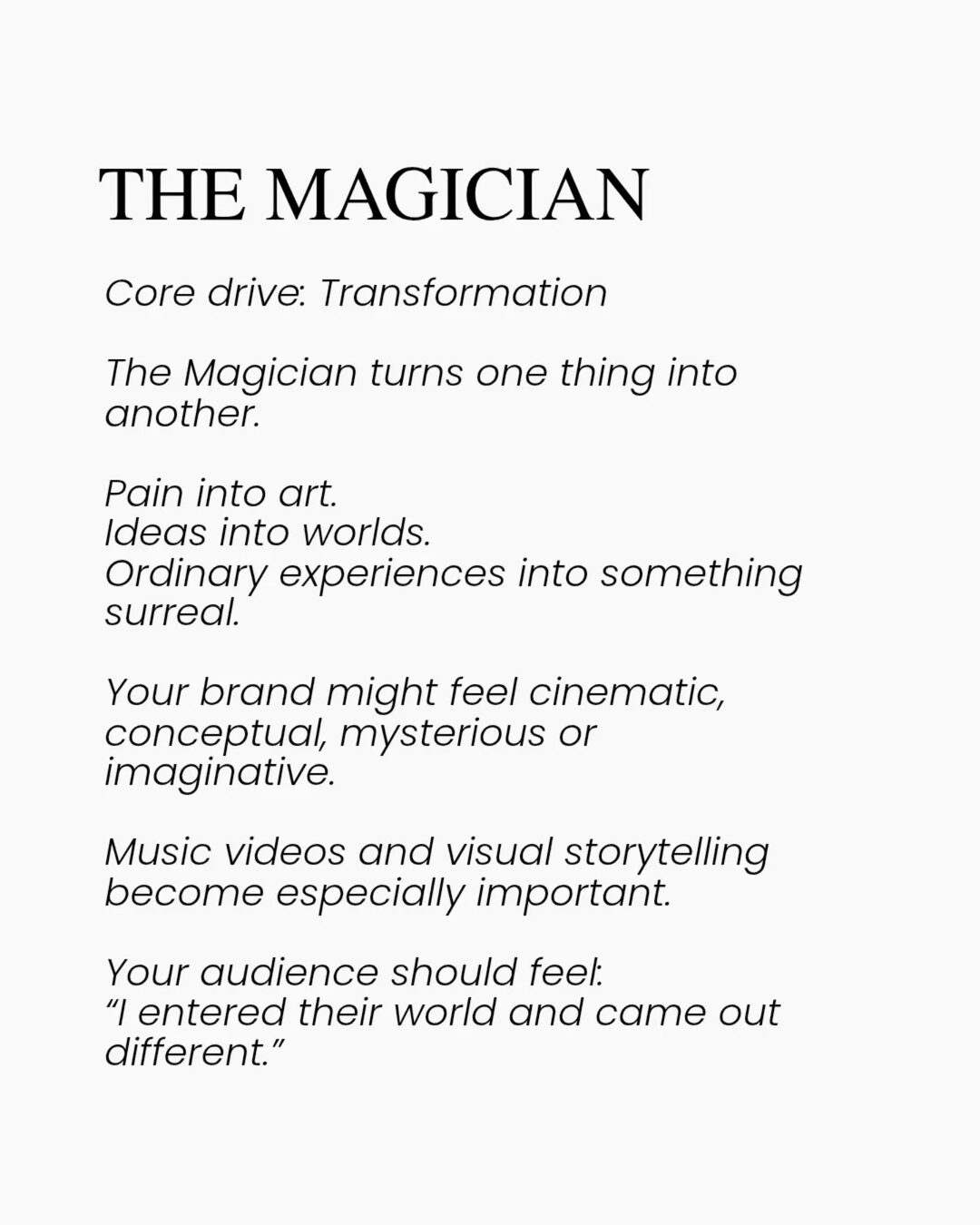
The Magician. Core drive: transformation. You turn one thing into another. Pain into art, ideas into worlds, ordinary experience into something surreal. Cinematic, conceptual, mysterious. Visual storytelling carries unusual weight here. Your audience should feel: I entered their world and came out different.

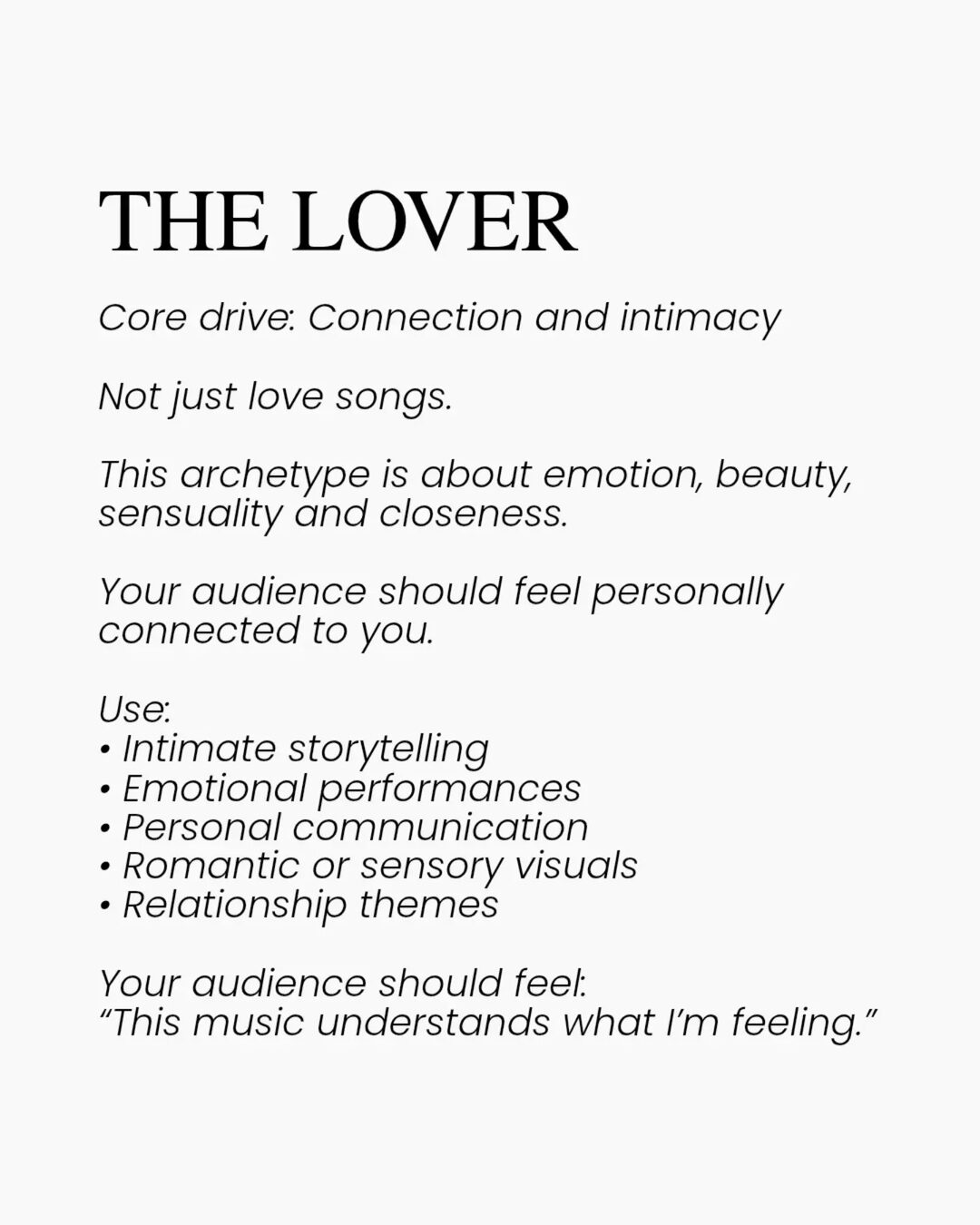
The Lover. Core drive: connection and intimacy. Not just love songs. It is emotion, beauty, sensuality, closeness. Intimate storytelling, emotional performance, personal communication, sensory visuals. Your audience should feel: this music understands what I'm feeling.

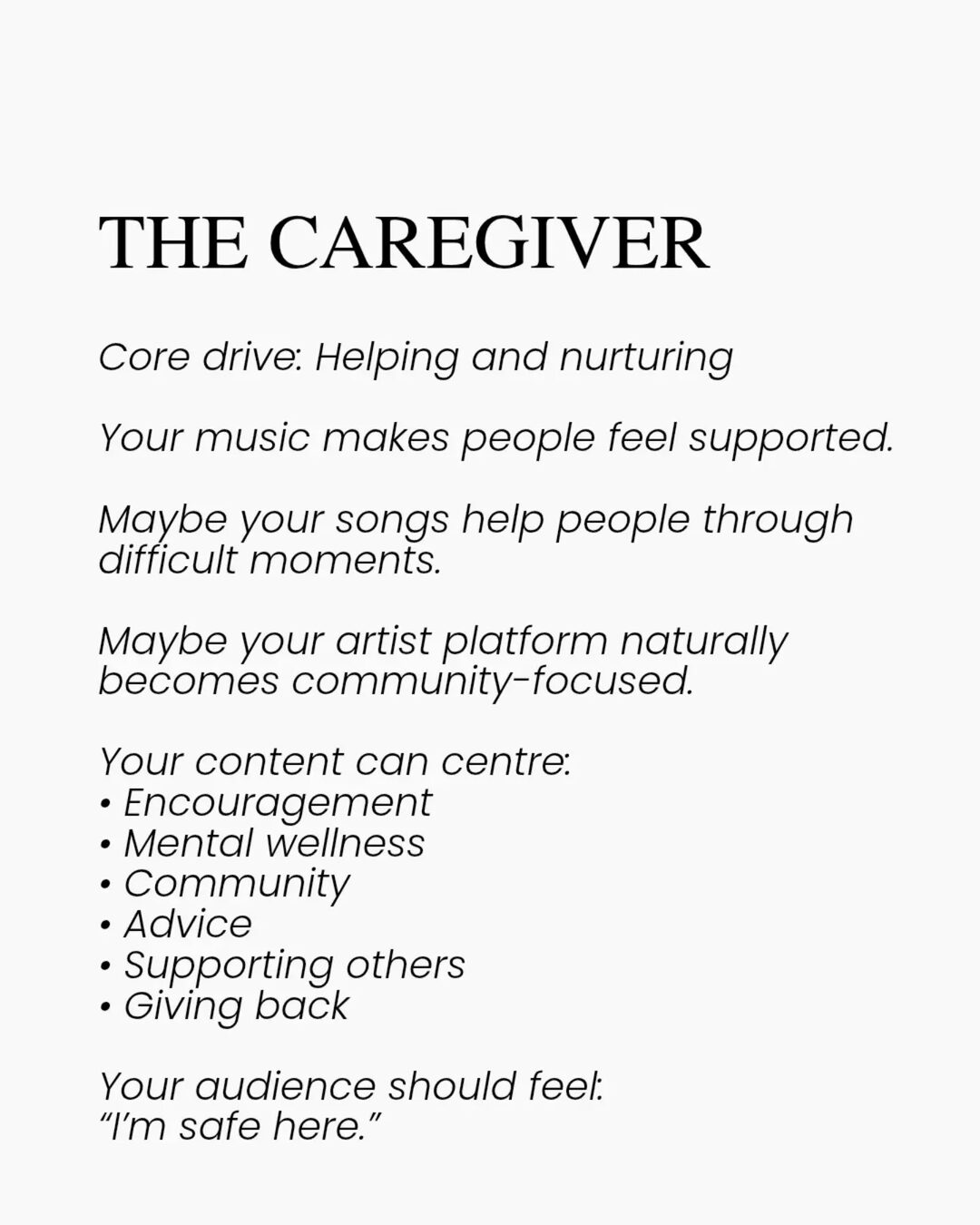
The Caregiver. Core drive: helping. Your music makes people feel supported, and your platform becomes community-focused almost by itself. Encouragement, mental wellness, advice, giving back. Your audience should feel: I'm safe here.

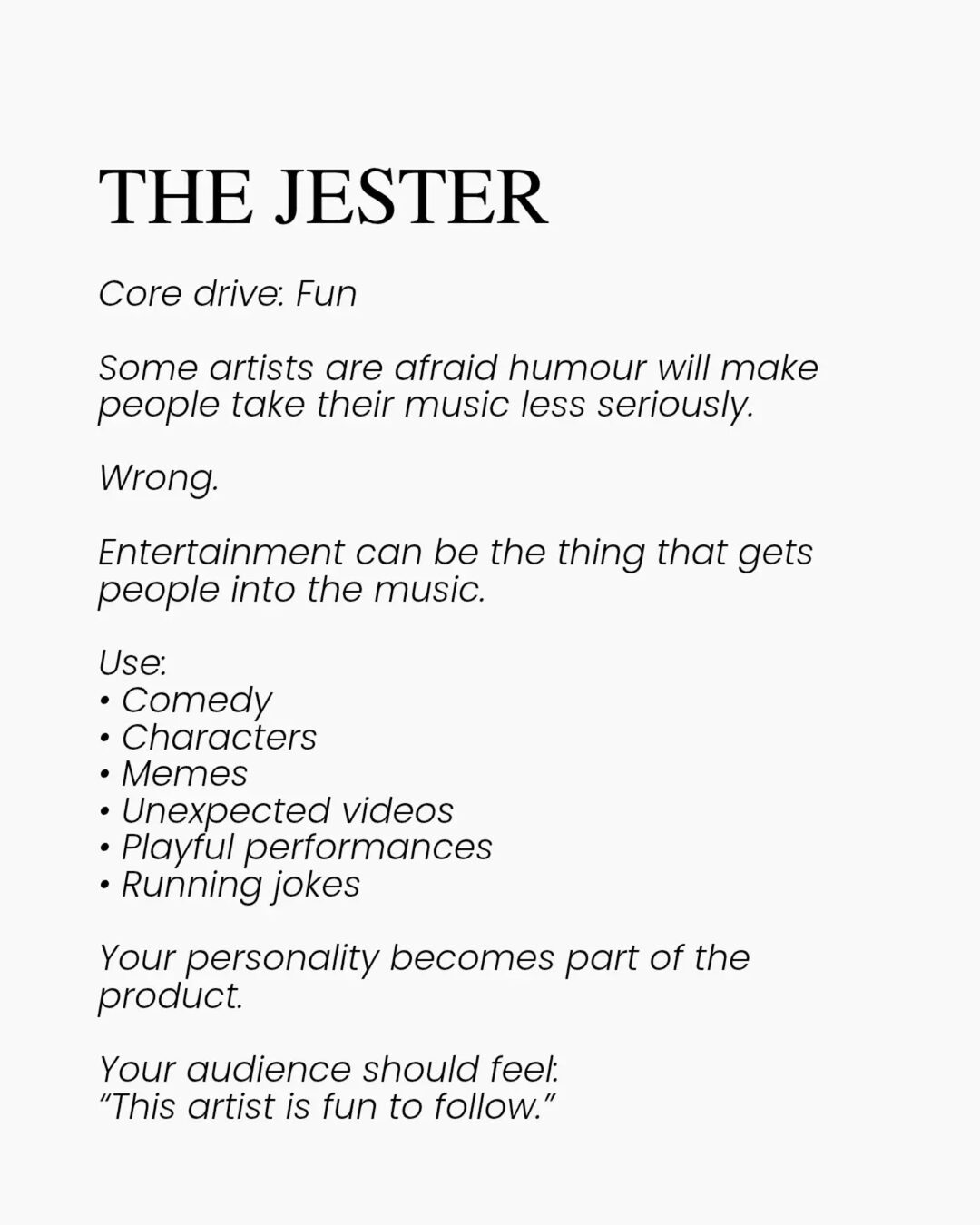
The Jester. Core drive: fun. Plenty of artists are scared humour will get the music taken less seriously. Wrong. Entertainment is often the door people walk through to reach the songs. Comedy, characters, memes, running jokes, unexpected videos. Your personality becomes part of the product. Your audience should feel: this artist is fun to follow.

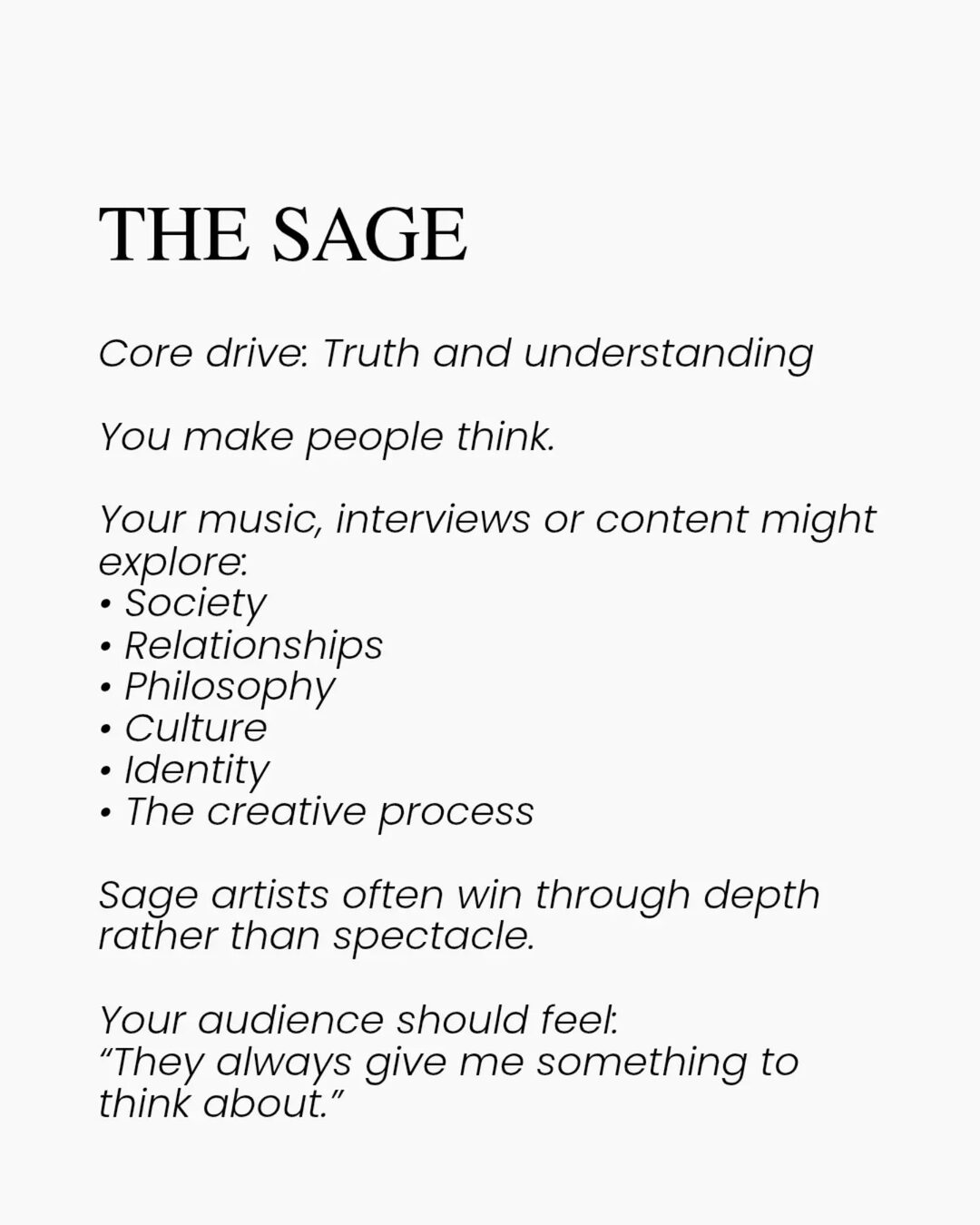
The Sage. Core drive: truth and understanding. You make people think about society, relationships, philosophy, culture, identity, the work itself. Sage artists tend to win on depth rather than spectacle. Your audience should feel: they always give me something to think about.

You are probably two of them

Almost nobody strong is only one. The interesting brands are combinations, and the combination is where the specificity lives.

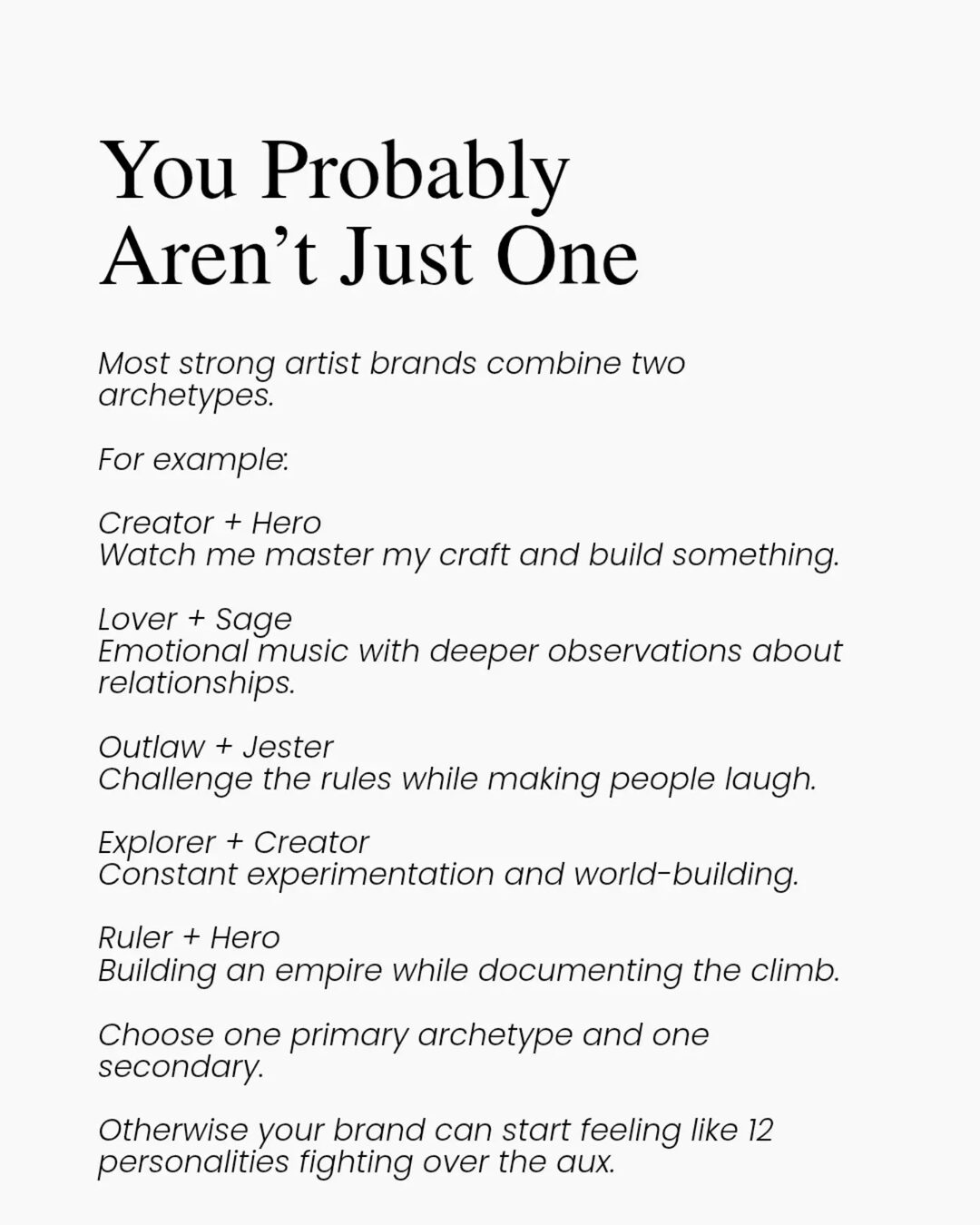
Creator plus Hero: watch me master my craft and build something with it. Lover plus Sage: emotional music carrying real observations about how people work. Outlaw plus Jester: break the rules and be funny while doing it. Explorer plus Creator: constant experimentation and world-building. Ruler plus Hero: building the empire while documenting the climb.

Pick one primary and one secondary. Two. Not five, not "a bit of all of them", because a brand trying to be everything reads as twelve personalities fighting over the aux, and an audience that cannot predict you cannot become loyal to you.

Then build the thing

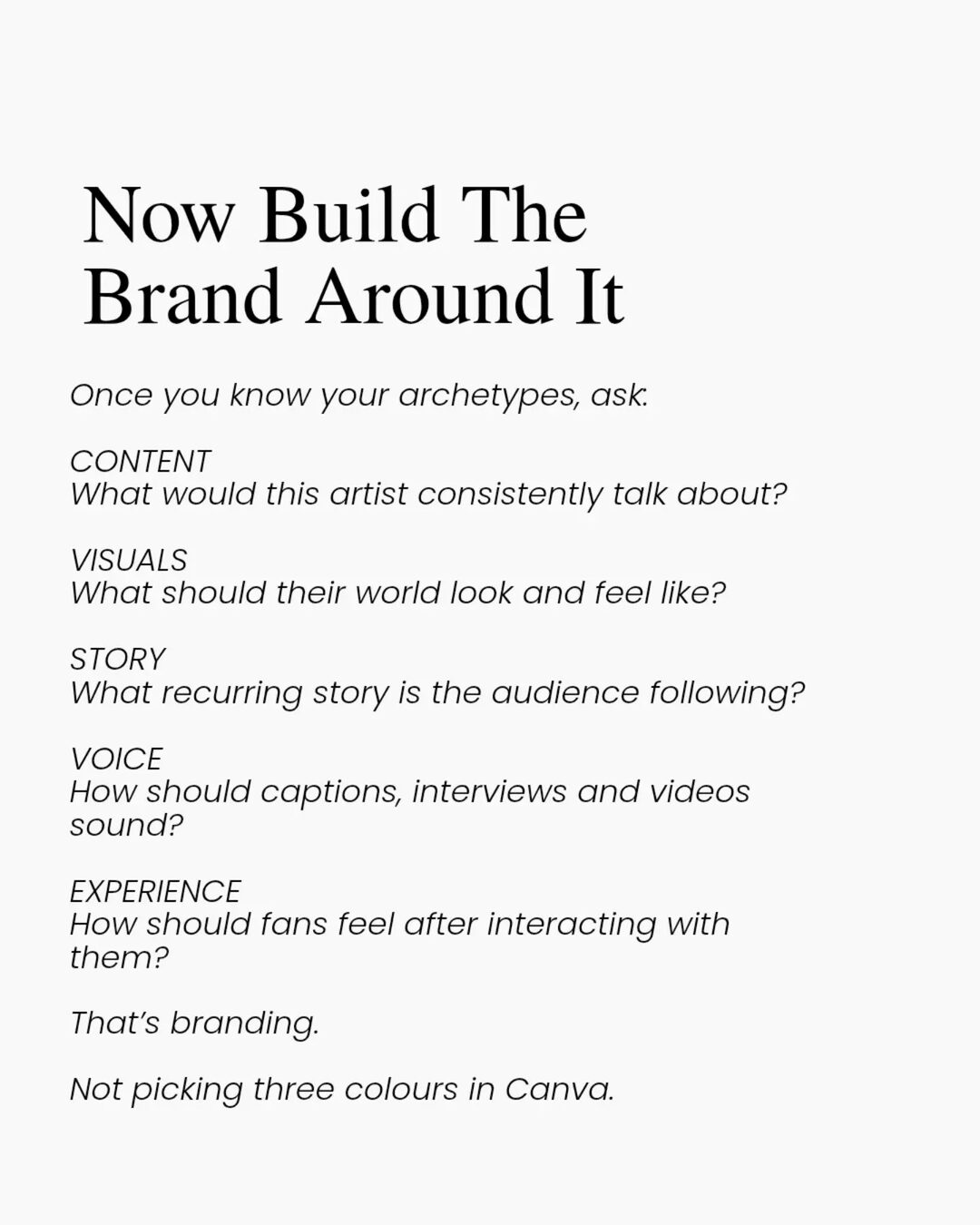
Choosing the archetype is the easy half, and on its own it changes nothing. The work starts with five questions, and they are the actual job.

Content. What would this artist consistently talk about?

Visuals. What should their world look and feel like?

Story. What recurring story is the audience following?

Voice. How should captions, interviews and videos sound?

Experience. How should fans feel after interacting with them?

Answer those five honestly and you have a brand: a set of decisions you can hold to across a year of posts, releases and interviews, where every piece reinforces the last instead of starting over.

That is branding. Not picking three colours in Canva.

Download the article as text

Source slides, all 18 SOURCE

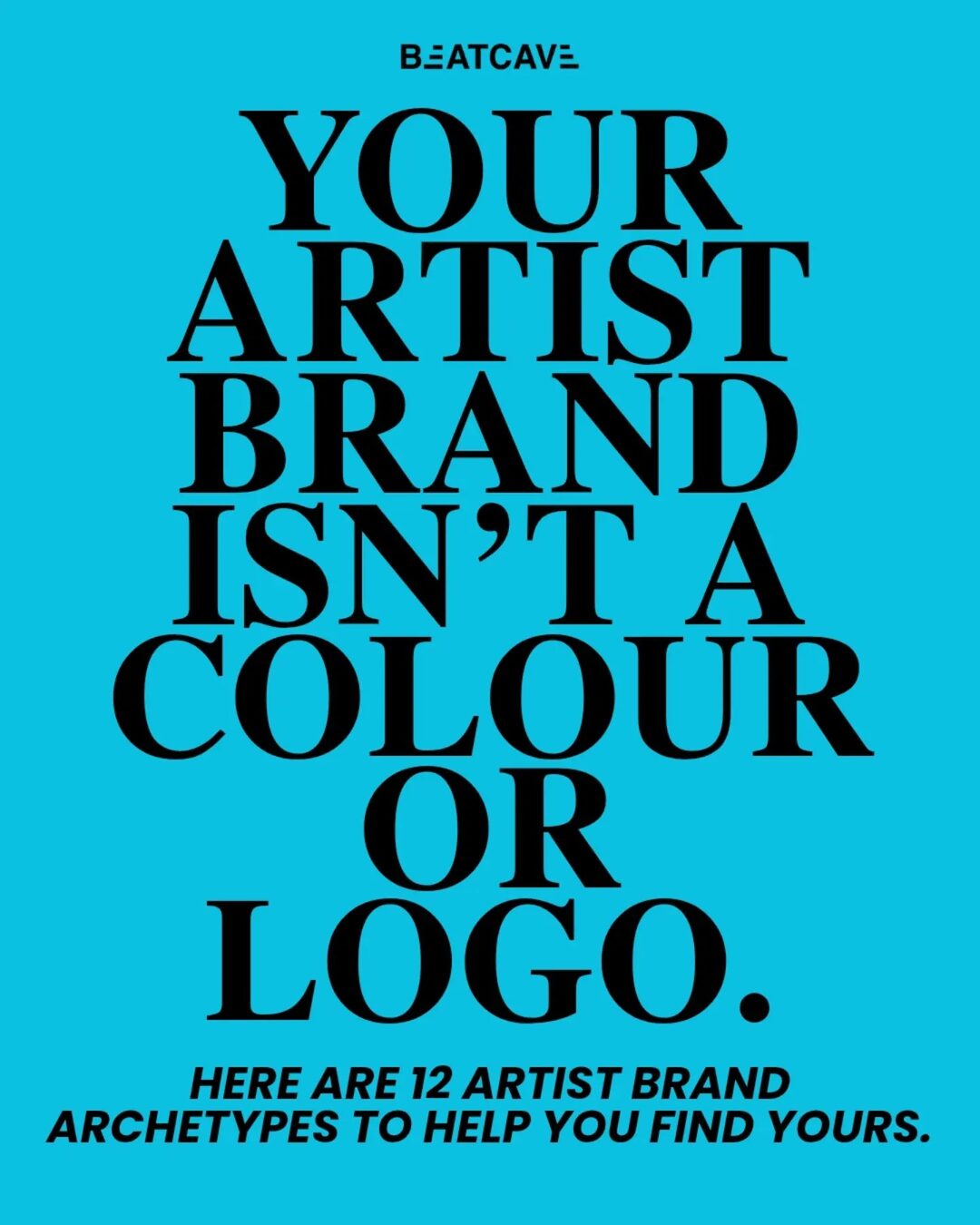
Source carousel slide 1 of 18
Slide 1 of 18 Full size
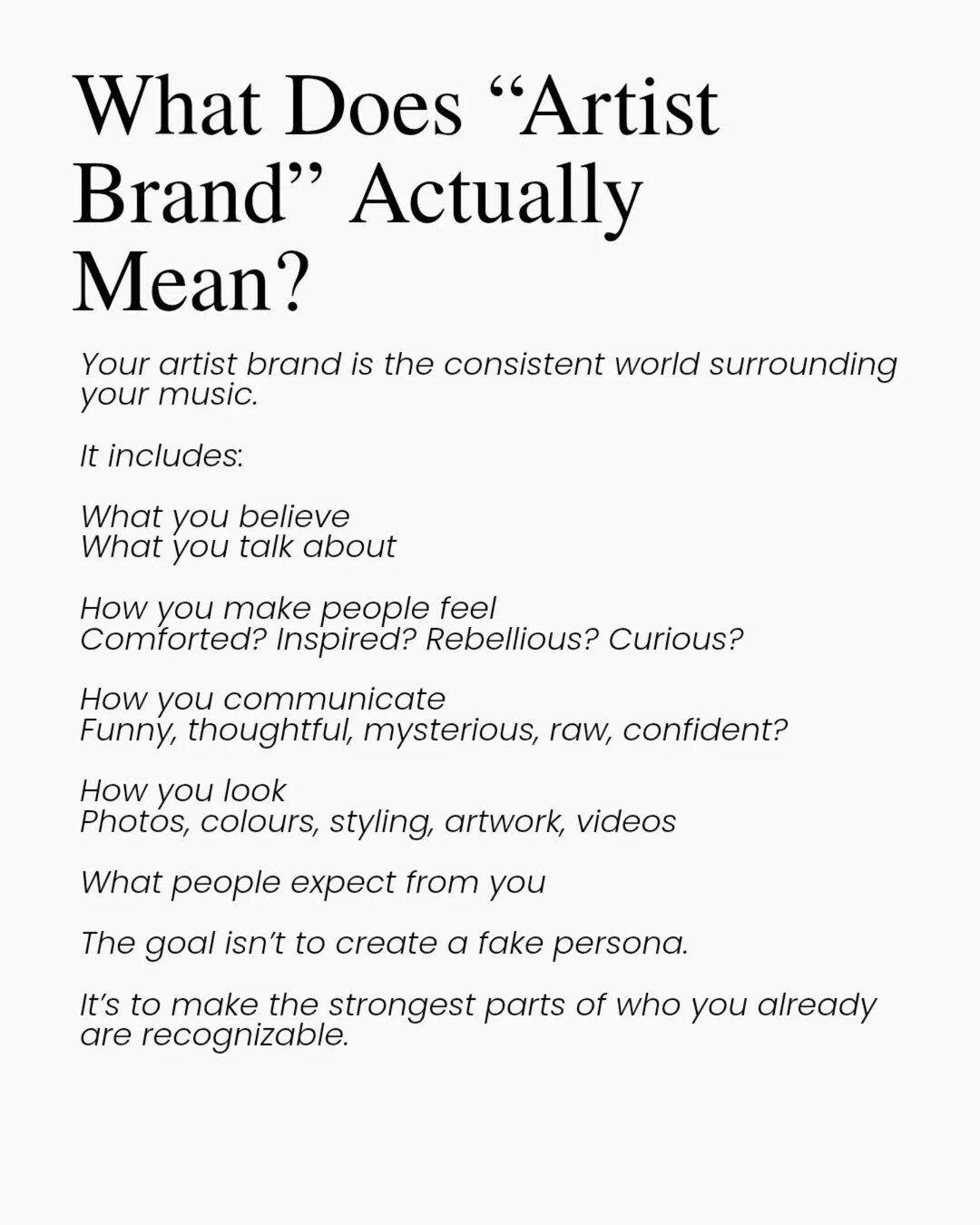
Source carousel slide 2 of 18
Slide 2 of 18 Full size
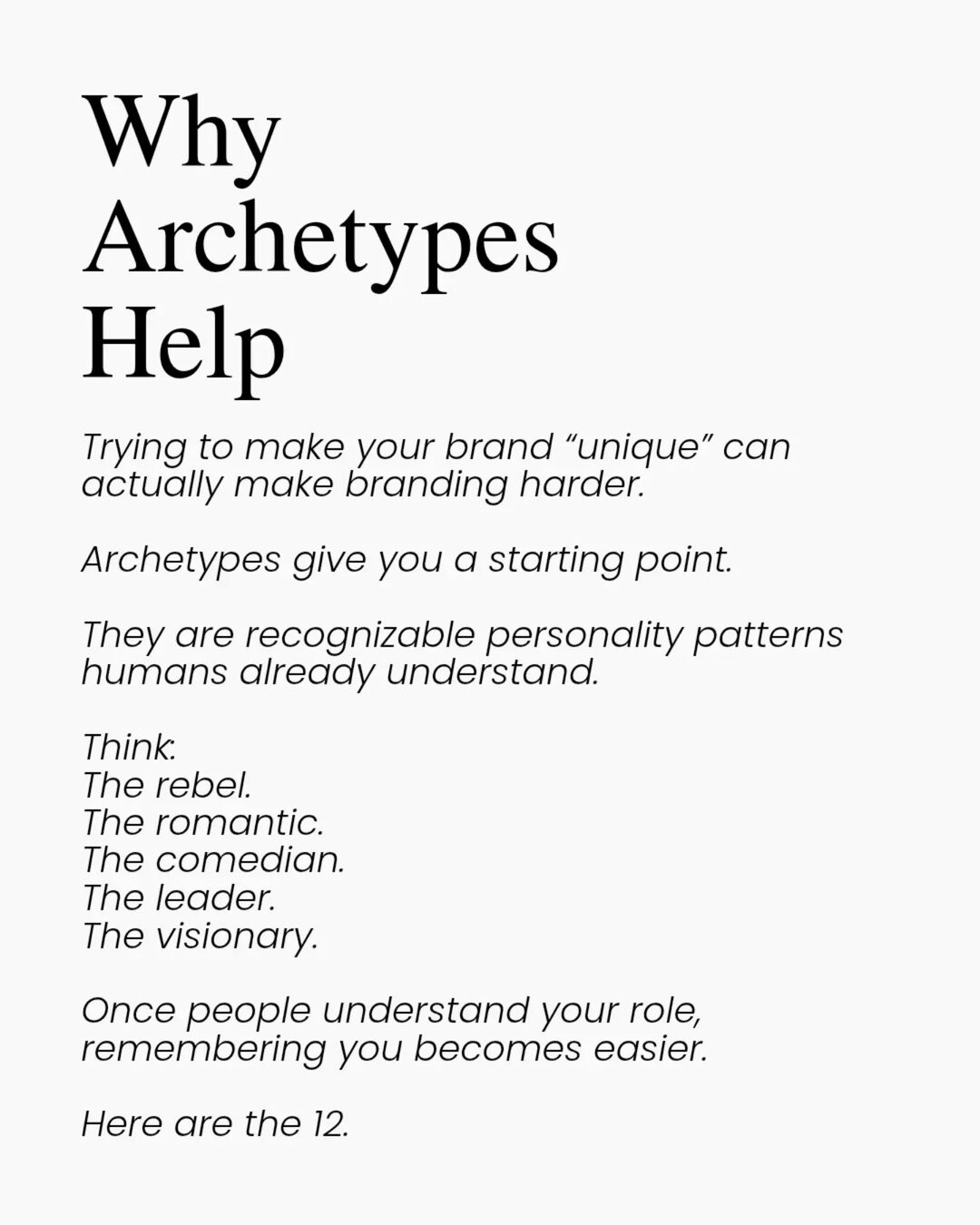
Source carousel slide 3 of 18
Slide 3 of 18 Full size
Source carousel slide 4 of 18
Slide 4 of 18 Full size
Source carousel slide 5 of 18
Slide 5 of 18 Full size
Source carousel slide 6 of 18
Slide 6 of 18 Full size
Source carousel slide 7 of 18
Slide 7 of 18 Full size
Source carousel slide 8 of 18
Slide 8 of 18 Full size
Source carousel slide 9 of 18
Slide 9 of 18 Full size
Source carousel slide 10 of 18
Slide 10 of 18 Full size
Source carousel slide 11 of 18
Slide 11 of 18 Full size
Source carousel slide 12 of 18
Slide 12 of 18 Full size
Source carousel slide 13 of 18
Slide 13 of 18 Full size
Source carousel slide 14 of 18
Slide 14 of 18 Full size
Source carousel slide 15 of 18
Slide 15 of 18 Full size
Source carousel slide 16 of 18
Slide 16 of 18 Full size
Source carousel slide 17 of 18
Slide 17 of 18 Full size
Source carousel slide 18 of 18
Slide 18 of 18 Full size

Verbatim slide transcript

Download as text

Read the transcript here

BEATCAVE.CA — "YOUR ARTIST BRAND ISN'T A COLOUR OR LOGO" — 18-slide carousel, posted Aug 21 2026
Verbatim transcription (line breaks as rendered on the slides)

SLIDE 1
[header mark: BEATCAVE]
YOUR ARTIST BRAND ISN'T A COLOUR OR LOGO.
HERE ARE 12 ARTIST BRAND ARCHETYPES TO HELP YOU FIND YOURS.

SLIDE 2
What Does "Artist Brand" Actually Mean?
Your artist brand is the consistent world surrounding your music.
It includes:
What you believe
What you talk about
How you make people feel
Comforted? Inspired? Rebellious? Curious?
How you communicate
Funny, thoughtful, mysterious, raw, confident?
How you look
Photos, colours, styling, artwork, videos
What people expect from you
The goal isn't to create a fake persona.
It's to make the strongest parts of who you already are recognizable.

SLIDE 3
Why Archetypes Help
Trying to make your brand "unique" can actually make branding harder.
Archetypes give you a starting point.
They are recognizable personality patterns humans already understand.
Think:
The rebel.
The romantic.
The comedian.
The leader.
The visionary.
Once people understand your role, remembering you becomes easier.
Here are the 12.

SLIDE 4
THE INNOCENT
Core drive: Hope, honesty, simplicity
Your world feels optimistic, nostalgic or sincere.
This fits artists whose music feels:
• Warm
• Wholesome
• Emotional
• Hopeful
• Uncomplicated
Brand it through:
Light visuals, natural settings, simple messaging, genuine storytelling.
Your audience should feel:
"Everything might actually be okay."

SLIDE 5
THE EVERYMAN
Core drive: Belonging and relatability
You're not trying to look untouchable.
You want listeners thinking:
"This person gets me."
Use:
• Everyday stories
• Behind-the-scenes moments
• Honest captions
• Imperfect content
• Community interaction
Your normal life can become part of the brand.
Your audience should feel:
"They're one of us."

SLIDE 6
THE HERO
Core drive: Achievement and overcoming obstacles
Your career becomes a story people want to watch unfold.
Think:
The struggle.
The discipline.
The setbacks.
The comeback.
The win.
Your content can document the journey instead of only announcing achievements.
Brand it through:
Bold visuals, progress stories, motivational messaging and visible ambition.
Your audience should feel:
"If they can do it, maybe I can too."

SLIDE 7
THE OUTLAW
Core drive: Rebellion
Your brand is built around challenging something.
Industry expectations.
Social norms.
Genre rules.
Fashion.
Culture.
Authority.
But rebellion needs an enemy.
"I'm different" isn't enough.
What exactly are you against?
Your audience should feel:
"Finally, someone said it."

SLIDE 8
THE EXPLORER
Core drive: Freedom and discovery
Your audience follows because they never know exactly where you'll take them next.
This works well for:
• Genre-fluid artists
• Travelling artists
• Experimental creators
• Artists obsessed with new cultures or experiences
Your curiosity becomes part of the content.
Your audience should feel:
"Take me somewhere new."

SLIDE 9
THE CREATOR
Core drive: Making something original
Probably one of the most natural archetypes for musicians.
But being a musician doesn't automatically make this your brand.
Creator artists make the craft itself interesting.
Show:
• Songwriting
• Production
• References
• Failed versions
• Studio decisions
• Visual development
• How ideas become records
Your audience should feel:
"I want to see how their brain works."

SLIDE 10
THE RULER
Core drive: Control, leadership and legacy
Your artist career feels bigger than individual songs.
You're building something.
A catalogue.
A company.
A movement.
A legacy.
Your communication feels decisive and intentional.
Brand it through:
Premium visuals, strong opinions, ownership, leadership and ambition.
Your audience should feel:
"This person knows exactly where they're going."

SLIDE 11
THE MAGICIAN
Core drive: Transformation
The Magician turns one thing into another.
Pain into art.
Ideas into worlds.
Ordinary experiences into something surreal.
Your brand might feel cinematic, conceptual, mysterious or imaginative.
Music videos and visual storytelling become especially important.
Your audience should feel:
"I entered their world and came out different."

SLIDE 12
THE LOVER
Core drive: Connection and intimacy
Not just love songs.
This archetype is about emotion, beauty, sensuality and closeness.
Your audience should feel personally connected to you.
Use:
• Intimate storytelling
• Emotional performances
• Personal communication
• Romantic or sensory visuals
• Relationship themes
Your audience should feel:
"This music understands what I'm feeling."

SLIDE 13
THE CAREGIVER
Core drive: Helping and nurturing
Your music makes people feel supported.
Maybe your songs help people through difficult moments.
Maybe your artist platform naturally becomes community-focused.
Your content can centre:
• Encouragement
• Mental wellness
• Community
• Advice
• Supporting others
• Giving back
Your audience should feel:
"I'm safe here."

SLIDE 14
THE JESTER
Core drive: Fun
Some artists are afraid humour will make people take their music less seriously.
Wrong.
Entertainment can be the thing that gets people into the music.
Use:
• Comedy
• Characters
• Memes
• Unexpected videos
• Playful performances
• Running jokes
Your personality becomes part of the product.
Your audience should feel:
"This artist is fun to follow."

SLIDE 15
THE SAGE
Core drive: Truth and understanding
You make people think.
Your music, interviews or content might explore:
• Society
• Relationships
• Philosophy
• Culture
• Identity
• The creative process
Sage artists often win through depth rather than spectacle.
Your audience should feel:
"They always give me something to think about."

SLIDE 16
You Probably Aren't Just One
Most strong artist brands combine two archetypes.
For example:
Creator + Hero
Watch me master my craft and build something.
Lover + Sage
Emotional music with deeper observations about relationships.
Outlaw + Jester
Challenge the rules while making people laugh.
Explorer + Creator
Constant experimentation and world-building.
Ruler + Hero
Building an empire while documenting the climb.
Choose one primary archetype and one secondary.
Otherwise your brand can start feeling like 12 personalities fighting over the aux.

SLIDE 17
Now Build The Brand Around It
Once you know your archetypes, ask:
CONTENT
What would this artist consistently talk about?
VISUALS
What should their world look and feel like?
STORY
What recurring story is the audience following?
VOICE
How should captions, interviews and videos sound?
EXPERIENCE
How should fans feel after interacting with them?
That's branding.
Not picking three colours in Canva.

SLIDE 18
Comment "ARCH" and we'll send over the questionnaire for you to know which archetype you are!

04

Website ownership

In progress. Research delivered, article not yet written.

The angle: Google stopped sending traffic, so an owned website went from a vanity project to survival.

Opened and read

Found but not opened

Located in search, blocked or paywalled on the way in. Nothing from these has been used.